
The Core Advantage: Torque and Efficiency
When tackling steep inclines, not all electric bikes are created equal. The placement of the motor is a critical factor that dramatically influences performance, and mid-drive systems consistently prove superior for hill climbing. Unlike their hub-drive counterparts, mid-drive motors are positioned at the bike's crank, delivering power directly to the drivetrain. This strategic placement unlocks a host of advantages in torque, efficiency, and handling, transforming challenging hills into manageable ascents for any rider.
The primary reason mid-drive electric bikes dominate hills lies in their superior application of torque and mechanical efficiency. By integrating the motor directly with the bicycle's existing gearing system, a mid-drive can leverage the cassette's gear ratios to multiply its force, much like a traditional cyclist does. This mechanical advantage is the key to conquering steep gradients without overwhelming the motor or draining the battery. It creates a synergistic relationship between rider input, motor power, and the bike's mechanics, resulting in a ride that is both powerful and remarkably efficient when the road points skyward.
-
Gearing Integration
The motor powers the chainring, not the wheel itself. This means you can shift into a lower gear on a steep hill, allowing the motor to spin at its optimal RPM (revolutions per minute) while delivering maximum torque to the rear wheel. This prevents the motor from bogging down and overheating, a common issue for hub motors on sustained climbs.
-
Superior Torque Delivery
Mid-drive motors are renowned for their high torque output, which is the rotational force that gets you moving from a standstill and powers you up an incline. Because this torque is applied at the crank, it benefits from the gear reduction of the drivetrain, resulting in immense climbing power at the wheel.
-
Enhanced Battery Efficiency
By using the gears to keep the motor in its most efficient power band, you consume significantly less battery power on climbs compared to a hub motor that must work harder at lower speeds. Pro Tip: To maximize efficiency and motor health, anticipate hills and shift into an easier gear before you start the ascent, not halfway up when the system is already under strain.
Beyond Power: Balance, Handling, and Control
Beyond raw power, a mid-drive system offers a significantly more balanced and controlled riding experience, which is paramount on challenging terrain. The motor, being the heaviest single component after the battery, is positioned low and centrally on the frame. This placement optimizes the electric bike's center of gravity, making it feel stable, planted, and predictable. This is a stark contrast to hub motors, which add significant unsprung weight to either the front or rear wheel, negatively impacting suspension performance and creating a less balanced feel that can be unnerving on steep, uneven, or winding climbs where precise handling is essential.
-
Low and Central Center of Gravity
Placing the motor at the bottom bracket is the ideal location for weight distribution. This lowers the overall center of gravity, making the bike feel incredibly stable and less prone to feeling top-heavy or unwieldy.
-
Improved Agility and Handling
With the weight centralized, the bike is more responsive to rider input. Steering feels natural, and navigating switchbacks or avoiding obstacles on a climb becomes more intuitive and less of a chore. The bike pivots around its center, rather than feeling like you're dragging a heavy front or rear end.
-
Enhanced Traction
A balanced bike distributes the rider's and its own weight more evenly between the front and rear wheels. This prevents the rear wheel from spinning out on loose surfaces and keeps the front wheel from lifting on extremely steep sections, ensuring you maintain crucial traction and control at all times.

The Intuitive Ride: Torque-Sensing Technology
A key, yet often overlooked, advantage of mid-drive e-bikes is the incredibly natural and intuitive riding feel they provide, thanks almost universally to the use of torque sensors. A torque sensor measures how hard you are pressing on the pedals and delivers a proportional amount of motor assistance. This creates a seamless extension of your own effort, making it feel as though you have bionic legs rather than a motor pushing you along. This level of refined control is indispensable when climbing, as it allows for subtle adjustments in power to maintain momentum and traction on technical or slippery surfaces.
-
Torque-Sensing Power Delivery
Unlike simpler cadence sensors that provide a set amount of power once you start pedaling, torque sensors offer a dynamic and responsive ride. Push gently, and you get a little help; push hard, and the motor gives you its full support.
-
Intuitive Power Modulation
On a technical climb, you can "feather" the pedals to apply just the right amount of power to clear an obstacle without spinning the rear tire. This precise control is something cadence-based hub motor systems simply cannot replicate.
-
Elimination of Jerkiness
The power delivery is smooth and immediate, perfectly matching your effort. There is no sudden lurch or lag, which provides a safer and more confidence-inspiring experience, especially when starting on a steep hill. Actionable Tip: Practice modulating your pedal pressure on small, varied inclines to get a feel for how the torque sensor responds. This skill will make you a much smoother and more efficient climber.
Meet the ENGWE L20 3.0 Pro
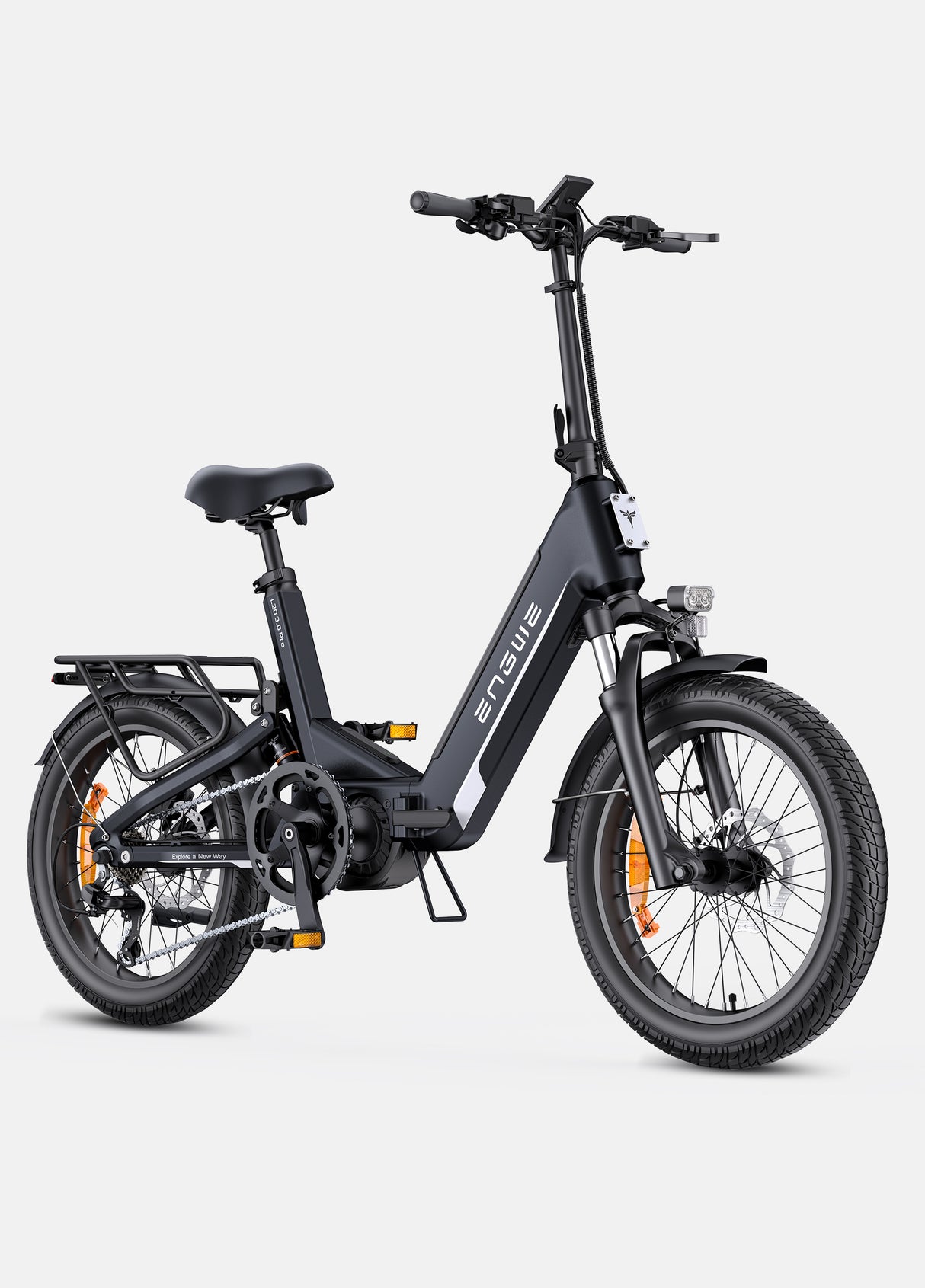
For riders seeking the ultimate hill-climbing machine in a versatile and comfortable package, ENGWE has masterfully engineered the ENGWE L20 3.0 Pro. As a brand at the forefront of e-bike innovation, ENGWE has designed this model to perfectly embody the mid-drive advantage. It showcases how cutting-edge technology can be integrated to create a ride that is not only immensely powerful for ascents but also exceptionally comfortable and secure for everyday use. The L20 3.0 Pro stands as a premier example of what a modern, compact mid-drive electric bike can achieve, making it a top consideration for urban adventurers and hill-tackling commuters alike.

-
Powerful Mivice Mid-Drive Motor
At its core is a high-performance 250W Mivice mid-drive motor that unleashes a staggering 100Nm of torque. This immense rotational force is what flattens hills and makes steep gradients feel effortless.
-
Endurance and Rapid Recharging
It’s equipped with a massive 720Wh Samsung battery, providing a remarkable range of up to 160km. Furthermore, the 8A fast charging capability means you spend less time waiting and more time riding.
-
Unmatched Comfort with Full Suspension
Uniquely for a compact e-bike, the L20 3.0 Pro features a full-suspension system, engineered to absorb up to 90% of vibrations, ensuring a smooth ride even on rough terrain.
-
Smart Security
The integrated ENGWE IoT module provides advanced anti-theft protection with real-time alerts, GPS tracking, and app-based monitoring, giving you complete peace of mind.
-
User-Focused Design
A foldable step-through frame makes it accessible and easy to store, while hydraulic disc brakes provide reliable stopping power, a critical safety feature when descending hills you’ve just conquered.
| Feature | Specification | Hill-Climbing Benefit |
|---|---|---|
| Motor Type | Mivice X700 Mid-Drive | Leverages bike's gears for maximum torque application. |
| Max Torque | 100Nm | Provides immense rotational force for steep inclines. |
| Sensor | Torque Sensor | Delivers intuitive, proportional power for smooth control. |
| Suspension | Full Suspension System | Maintains traction and comfort on uneven climbing surfaces. |
| Brakes | Dual-Piston Hydraulic | Ensures safe and reliable stopping power on descents. |

Long-Term Value and Maintenance
Finally, considering long-term value and maintenance reveals practical advantages of mid-drive systems that can save owners time and money. While the initial investment might be higher, the design simplifies common maintenance tasks and can lead to greater durability of certain components. The motor's placement means it doesn't interfere with the wheels, a seemingly small detail that has significant real-world implications for routine upkeep. This focus on standard bicycle mechanics and component protection is a key aspect of their thoughtful engineering, making them a wise choice for riders who value both performance and practicality.
-
Simplified Wheel Maintenance
Changing a flat tire on a mid-drive e-bike is exactly the same as on a non-electric bike. With a hub motor, you have to deal with disconnecting power cables and handling a much heavier wheel, which can be a complicated and frustrating roadside repair.
-
Reduced Stress on Spokes
Hub motors apply their driving and braking forces directly at the hub, which puts a great deal of stress on the spokes and rim. Mid-drive systems deliver power through the drivetrain, which is a more natural and less stressful load for the wheel to handle, potentially leading to fewer broken spokes over time.
-
Use of Standard Bicycle Components
The wheels, hubs, and cassettes on mid-drive bikes are typically standard bicycle parts. This makes finding replacements or upgrades easier and often more affordable than sourcing proprietary parts for a hub motor wheel. Knowledge Point: To get the most life out of your drivetrain (chain, cassette, chainring), it's crucial to practice clean shifting and perform regular cleaning and lubrication, as it bears the full force of both you and the motor.
Are mid-drive motors better for every situation?
For hill climbing, technical riding, and achieving a natural cycling feel, yes. For flat-terrain cruising where simplicity and cost are top priorities, a hub motor can be a perfectly suitable and more affordable option.
Do mid-drive systems cause the chain and cassette to wear out faster?
They can, as more power is being transmitted through the drivetrain. You can significantly extend the life of these components by using proper shifting techniques (i.e., not shifting under full power) and keeping the chain clean and well-lubricated.
What is the most important motor specification for climbing hills?
Torque, measured in Newton-meters (Nm). While watts are important, torque is the direct measure of the motor's rotational force, which is what you feel when accelerating and what gets you up a steep hill.
Ultimately, for conquering ascents with confidence and control, the mid-drive advantage is undeniable.