
The Core of the Climb: Powertrain
A hill-climbing fat tire electric bike allows you to turn arduous ascents into triumphant thrills. However, effective fat tire hill-climbing extends far beyond mere wattage to include a potent motor with high torque, a resilient battery, and parts designed for traction and control. To help you determine the ideal e-bike for conquering summits with strength and presence, we divide the five crucial mountainous dimensions. The most critical dimension of a hill-climbing e-bike is the powertrain, comprised of the motor and battery. The powertrain section is the bike’s beating heart, providing rapid climbing power and endurance. An ineffective powertrain might leave you battling uphill, often making your bike a terrible purchase. When selecting an e-fat tire for heavy hill climbing, give particular attention to these two components. The motor’s output energy, measured in Newton-meters, is frequently more essential than the actual wattage when it comes to MEP. Torque is angular strength, the power that pushes you up an incline from a dead stop. The power supply, or horsepower of the battery, directs the length of time you may sustain that force. The following are two crucial factors to examine:
Motor's Considerations:
- 80 Nm of torque or more should be generated by the motor. When it comes to actual climbing power, this is the most important feature.
- 750W continuous power should be accounted for a fat tire e-bike. This energy is utilized constantly for a long ascent without overheating.
- Mid-drive engines are frequently the best option for climbing since they utilize the bicycle’s gears and apply power at the pedal; nevertheless, strong, geared hub motors are also remarkably efficient and usually less expensive.
Battery Specifications:
- Capacity (Watt-hours): You can calculate this by multiplying the Volts by the Amp-hours. For hilly terrain, it is recommended that you get a battery of at least 600Wh to have sufficient range.
- Voltage: You should stick with a 48V system or more. Higher voltage platforms supply power more effectively when they are under heavy load, for example, during a steep hill ascent. A 48V motor is okay and high – often, though, the frame size determines how many cells can fit in the frame, and 52V is standard; however, 84V motors are the most powerful.
- Cell Quality: It is essential to ask who the battery cell manufacturer is. An unknown brand may be using low-quality cells. Samsung, LG, and Panasonic are the best in terms of reliability and lifespan.
Control and Comfort: Taming the Power
Apart from pure power, you need a system that enables you to control the power effectively and is also comfortable and safe, especially on diverse terrains. This level reflects the groupsets, brakes, and suspension. A climber should have a wide array of gears to find the right cadence for assisting the motor, powerful brakes to control speed, and suspension to keep you connected to the ground. Ignoring those elements makes the most powerful e-bike feel wild and difficult on challenging hills.
Drivetrain and Gearing:
- Gear Range: Having a huge “granny gear,” e.g., a 34-tooth cog or larger on the cassette, makes a big difference. It means you can spin the pedals at a high cadence, which is beneficial for you and the motor. On e-bikes, turning the pedals engages the motor, which in turn helps spin the wheel.
- Reliable Components: Components from reputable vendors such as Shimano or SRAM ensure a smooth-shifting transmission under heavy load.
Braking System:
- Hydraulic Disc Brakes: These brakes are the gold standard for any competent fat tire e-bike. They provide significantly better stopping power, modulation, and reliability compared to mechanical brakes.
- Rotor Size: The size of the brake rotors can be important. Larger rotors, such as 180mm or larger, offer better heat dissipation and more braking power, which is very important for your safety on long downhills.
Suspension:
- Front Suspension Fork: It is critical for maintaining traction on very steep uphill sections or uneven slopes because it ensures the front tire stays on the ground.
- Lockout Feature: A lockout lever can also be a helpful detail. It allows you to make the suspension fork rigid so that when you’re climbing steep hills on smooth pavement, the fork doesn’t rob you of energy as it absorbs bumps.

The Foundation: Frame and Tires
More fundamental is the physical structure of the bike and the point of contact with the ground. Frame geometry directly affects your riding position, which dictates weight distribution and control on extreme gradients. Fat tires are the absolute superstars, supplying the giant heaps of traction necessary to claw up soft or loose surfaces where other bikes would spin out and slip away. All of the elements given above interact to help you pick a bike that feels steady, rooted, and, most crucially, instills confidence when the trail transforms into a wall.
Frame Geometry and Materials:
- Center of Gravity: The battery and motor should be arranged in such a way that the mass is balanced and located low on the frame.
- Rider Position: When climbing a grade, a more forward-tilting riding position ensures that your weight is on the front wheel, lowering the possibility of it lifting up.
- Frame Stiffness: The stability of a step-over or high-step frame is generally greater than that of a step-thru frame. It will give you more rigidity and response during aggressive pedal strokes.
Fat Tire Selection:
- Tire Width: A width of 4.0 inches is standard and offers an excellent compromise between traction and flotation over soft surfaces.
- Tread Pattern: An aggressive, knobby tire pattern is essential for traction on off-road or mixed-surface climbing.
- Tire Pressure (Pro Tip): One of the easiest and most effective ways to boost climbing traction is to adjust your tire pressure. Decreasing the pressure broadens the tire’s contact patch, boosting grip on loose terrain. Try a pressure of around 10-15 pounds per square inch, and also experiment to find the most suitable pressure setting based on your weight and the trail’s condition.
A Top Recommendation: The ENGWE M20
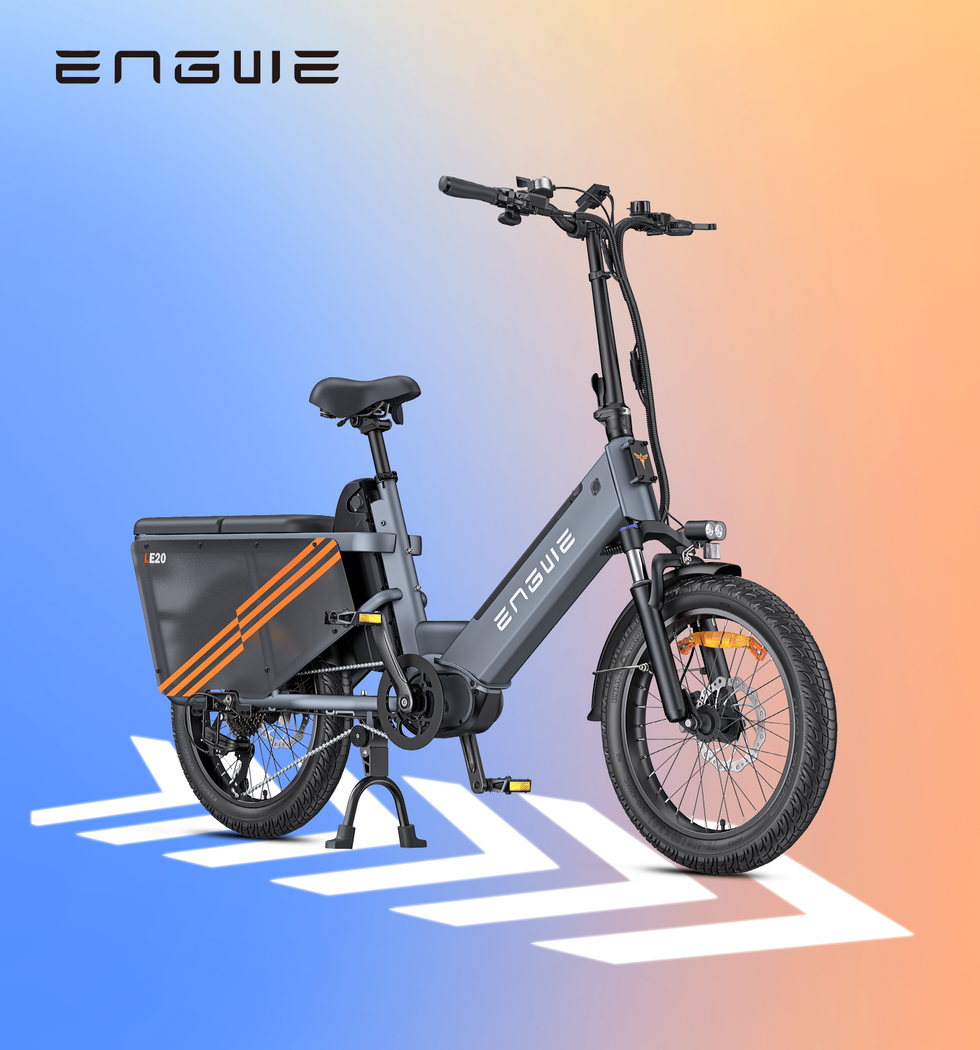
Concerning power, design, and capability for hill-climbing, there are certain specific recommendations that offer all three desirable features. Your focus should be on a single bike aligning all three aspects of power, design, and capability. The perfect example is the ENGWE M20. This bike is built on a spirit of adventure while focusing on performance. The powerful 750W brushless motor, which can peak at 1000W, delivers enormous torque to conquer imposing inclines. The M20 is more advanced given its innovative dual-battery system—a rider can easily install a second battery to double the range. This feature is a game changer for longer, hilly rides. This, combined with its full suspension system (front and rear suspension), 20 x 4.0 fat tires, and a stylish design, makes it stand out from the competition. This bike isn’t just transportation; it’s a declaration of capability and freedom. Therefore, it is an excellent choice for anyone serious about climbing hills.


Making Your Final Decision
The final step before making an informed decision is to develop a framework for comparing these models. It might be a bit daunting to compare spec sheets, but there are only a few key specs that matter on the climb. A simple checklist will help make understanding the differences easier. Also, keep in mind the brand’s reputation, warranty, and customer service quality. The table below shows a comparison for a few popular models to illustrate the minimum set of checkmarks to look for in a bike. Comparison points:
- Torque (Nm) vs. Wattage: The maximum climbing ability is always limited by the torque specified in Nm. When comparing between models, it is better to have more torque.
- Battery Capacity (Wh): The higher the total value of Watt-hours, the higher the potential range.
- Component Grade: Based on the component system indicators, higher quality usually means a stronger and more durable e-bike. Popular companies are Shimano, SRAM, and TEKTRO.
- Total Bike Weight: It is easier to ride a lighter e-bike, but a little more weight from components usually doesn’t affect rideability.
Feature Comparison Table
| Feature | Aventon Aventure | Rad Power Bikes RadRover 6 Plus |
|---|---|---|
| Motor | 750W Brushless rear hub | 750W Brushless Geared Hub |
| Torque | 80 Nm | Not explicitly stated |
| Battery | 48V 15Ah (720Wh) | 48V 14Ah (672Wh) |
| Brakes | Hydraulic disc brakes | Hydraulic disc brakes |
| Tires | 26″ x 4.0″ | 26″ x 4.0″ |
Frequently Asked Questions
1. Q: Is a 750W motor strong enough for very steep hills?
A: Yes, a 750W motor generally should be, but the more crucial factor is torque. A 750W motor with 85 Nm of torque will demolish a 1000W motor with only 60 Nm on a steep climb.
2. Q: Should I use a hub motor or a mid-drive motor when going up a hill?
A: Mid-drive motors are theoretically more efficient for climbing due to the fact that they use the bike’s gears. However, advanced high-torque geared hub motors are incredibly capable and can handle most hills easily, and usually at a much lower cost.
3. Q: How can I keep my battery despite using it uphill?
A: Use the lowest gear you possibly can get away with, and a reasonable level of pedal assist instead of accelerating with the throttle. Keeping the same steady pace with the bike’s motor as you would if your leg muscle served as the motor will be significantly more effective.
Now that you have gained enough knowledge, you are good to go and decide on the best electric bike that can help you climb any hill.