
While many consider the issue of choosing the ideal pressure for their fat tire e-bike to be an inconsequential hassle, it is actually the most vital upgrade you can make to make your riding experience more enjoyable. As the ideal pressure for your vehicle, this direct parameter is measured in PSI, and it greatly influences your e-bike’s range, ride comfort, traction, and overall riding sense. This tutorial will include systemized information in five critical dimensions to help you ace this critical metric and unleash your e-bike’s full power.
The First Dimension: The Fundamental Physics of Tire Pressure
The first dimension is the fundamental physics of why tire pressure is so critical for a fat tire electric bike. Fat tires use a much lower PSI range than standard bicycle tires, turning the very tire itself into a primary element of your suspension and grip system. Changing this simple parameter changes the fundamental way your bike interacts with the ground. This is a free upgrade that makes every minute of your ride better. The contact patch is the area of the tire that contacts the ground. Higher PSI creates smaller contact patches and more concentrated weight distribution. This increases rolling efficiency. In contrast, lower pressure increases your e-bike’s tire patch size, resulting in more traction and grip. Additionally, “Comfort and Suspension” is a primary benefit: like a mechanical suspension, lower tire pressure increases its ability to absorb the bumps and vibrations of potholes, cracks, and rough roads, giving you a smoother, more comfortable ride. Higher pressures make the ride feel more brittle; your bike will bounce across the road, and almost any situation feels harsh.
The Second Dimension: Main Factors That Impact the Best PSI for You
It’s not just one ideal pressure that would work the same way for every rider and every type of bike. This value is dynamic and should be adjusted to many factors, from your body to the state of the environment and your equipment. Monitoring these factors will let you know with maximum certainty that you always ride under the best configuration for that particular ride. The main factors are as follows:
Weight of the rider and the bike.
This is by far the most important factor.
1) Heavier riders should use more pressure, avoiding tire deformation that can kill the handling while at the same time preventing dents in the rims. Generally, you can add 1 PSI for every 10-15 pounds over 150 pounds.
2) Lighter riders may take the pressure down for more comfortable rides with enough wiggle room before you start to swerve.
3) Carrying cargo? You should envision this possibility. Add 1 or 2 PSI for every 20 pounds of cargo.
Type of ground.
The material you ride on determines the balance between traction and grip.
a) Mainly firm surfaces (pavement): Use the higher end of the recommended range of pressures. For example, with 20-25 PSI, you have minimal friction and great speed.
b) Mainly hard dirt: Find an ideal balance between speed and traction.
c) Mainly loose rocks or sand: Decrease the pressure even more, for example, to 10-15 PSI. It will allow your tire to wrap around obstacles and stones better.

The Third Dimension: How to Practically Measure and Adjust Your Tire Pressure
Our goal is to make this something you will want to do as part of your pre-ride checklist. The right tools and systematic recommendations remove the guesswork and ensure accurate and repeatable results. Keep in mind that even 1-2 PSI changes can drastically alter your e-bike’s feel and performance.
Essential Equipment:
Digital Pressure Gauge: Get a low-pressure digital gauge – most pump gauges are inaccurate at the low PSIs suited for fat tires.
Reliable Pump: Get a large-volume floor pump – proper inflation will take seconds. A high-quality portable pump is also a must for trailside corrections.
The Adjustment Process:
First, Check Sidewall Rating – tires often have the recommended pressure range from the manufacturer printed on the sidewall.
Second, Establish a Baseline – start with these recommendations, adjusted for your body weight and typical riding terrain.
Third, Measure and Adjust – pump more or less air to meet your baseline, using the gauge.
Fourth, Test Ride – is it too bouncy and harsh? It's too high! Is it unresponsive and hard to steer? It's too low!
Fifth, Fine-Tune – test ride after every 1 PSI change until your e-bike is giving you the most comfortable and responsive ride.
| Rider Weight | Pavement (PSI) | Hard-Packed Trail (PSI) | Sand/Snow (PSI) |
|---|---|---|---|
| Under 150 lbs | 16-22 | 12-15 | 5-7 |
| 150-200 lbs | 20-25 | 14-18 | 6-8 |
| Over 200 lbs | 22-28 | 16-20 | 7-10 |
The Fourth Dimension: Your Equipment
The bike and its equipment lay the groundwork for a fun ride. While technique plays an important part, the optimal set-up of a great fat tire e-bike built around competent interplay will also be straightforward. The bike’s formidable frame, potent motor, and high-quality suspension should all combine harmoniously with its tires to provide an unmatched riding experience on any terrain.
What to Look For in Quality Fat Tires:
Durable Casing: Strong sidewall tires that can withstand the low-pressure necessity.
Versatile Tread Pattern: Tires with a quick-rolling center part for less friction and harder knobs on each side for better handling when leaning.
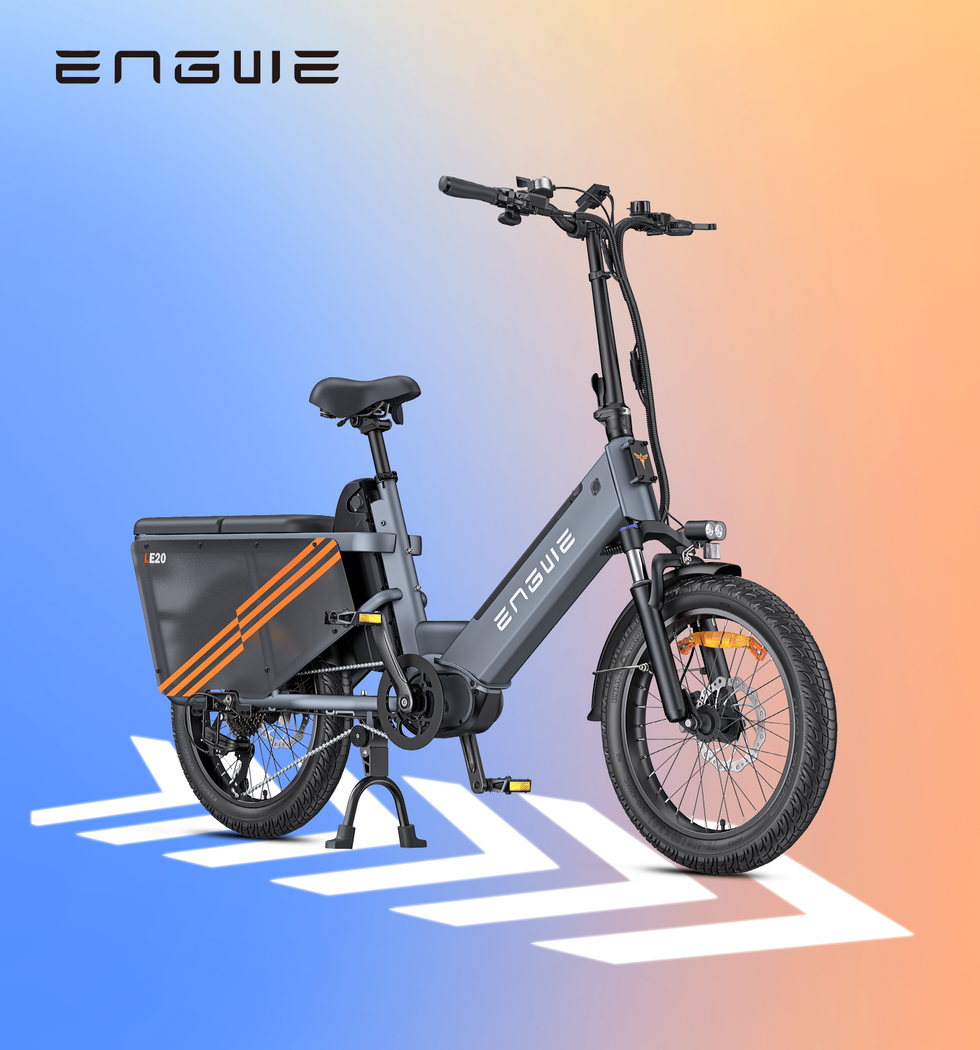
The ENGWE M20: A Perfect Platform
""For anyone looking for the best-engineered fat tire-equipped electric bike, the ENGWE M20 is a top choice. The M20 was designed as a versatile all-terrain vehicle in which tire performance is an essential element of adjustability.
Robust 20×4.0-Inch Fat Tires: High-quality wide tires provide a fun, scalable basis for different pressures.
Full Suspension System: The M20’s full suspension system will accommodate you if you decide to use more pressure. The suspension will not impair the smooth ride associated with low-pressure techniques.
Powerful Motor: The M20’s motor is powerful enough to enable you to ride as hard as you like without it failing.


The Fifth Dimension: Advanced Techniques and Troubleshooting
After you have mastered the basics, you can move on to studying advanced setups and learn how to diagnose common tire pressure-related issues. This will allow you to fix problems before they happen and ultimately reduce your spending on repairs, making your e-bike perform even better and more reliably in the future.
Tubeless vs. Tubed Setups
Tubed (Standard): This is the default mounting method with an inner tube in your tire.
Tubeless: Replacing inner tubes with liquid sealant is a highly recommended change. It permits you to run even lower pressures while still maintaining grip without the danger of a “pinch flat,” and the sealant will automatically close minor perforations.
Temperature and Altitude
Temperature: As the climate changes, air pressure changes. Your bike’s tires will have more pressure on hot days and less on cold days. At seasonal changes, measure the tire pressure to avoid problems.
Altitude: As air pressure drops at higher elevations, your tire pressure also drops in relation to the air volume on the outside. It is a marginal matter but is worth considering while touring in the mountains.
Troubleshooting Common Problems:
Sluggish steering or self-steer: Your e-bike seems to have "automatic" steering. Solution: Your front tire has less air than the back tire; add 1-2 PSI.
Harsh, bouncy ride: You feel every tiny bump on the road. Solution: Release 1-2 PSI if your pressure is too high.
Frequent pinch flats: You have to change the tube regularly. Solutions: Increase the tire pressure during off-road rides or switch to a tubeless setup.
Q&A
How often should I check my tire pressure?
You should check it before every single ride. Fat tires are a low-volume system, and even a small air loss can change the PSI and your ride dramatically.
What is the biggest tire pressure mistake riders make?
People often inflate them far too high, like a road bike tire. This makes you lose almost all the benefits of fat tires; the ride becomes harsh and traction is less than perfect.
Can I use a standard car tire gauge?
Not recommended. Car tire gauges don’t work well in the 5-30 PSI range. A good low-pressure digital gauge can be had for under $30, and it’s worth every penny.
Knowing your tire pressure is literally the difference between riding a rocket and a jalopy.