
Why Upgrade and The 'Complete Bike' Solution
Choosing the appropriate suspension or upgrading the existing suspension are two of the simplest methods to considerably improve your fat tire e-bike. The weight and extra speed of your battery-powered ride necessitate a stiffer fork to combat rough conditions and enhance traction while making you feel more comfortable and balanced. This guide reviews the best of the best, including complete, flawlessly tailored e-bike systems or professional-grade add-ons to assist you in identifying your ideal combination of technology and affordability.
Yet, for many riders, a complete e-bike from day one is the most logical choice. The reason why an out-of-the-box solution is more preferable is that there are no weak points in the system, and everything is perfectly matched. In other words, there is no chance that a suspension fork would fail during a ride, mainly due to compatibility or setting issues. Thus, such a platform is the most reliable and effective for beginners.
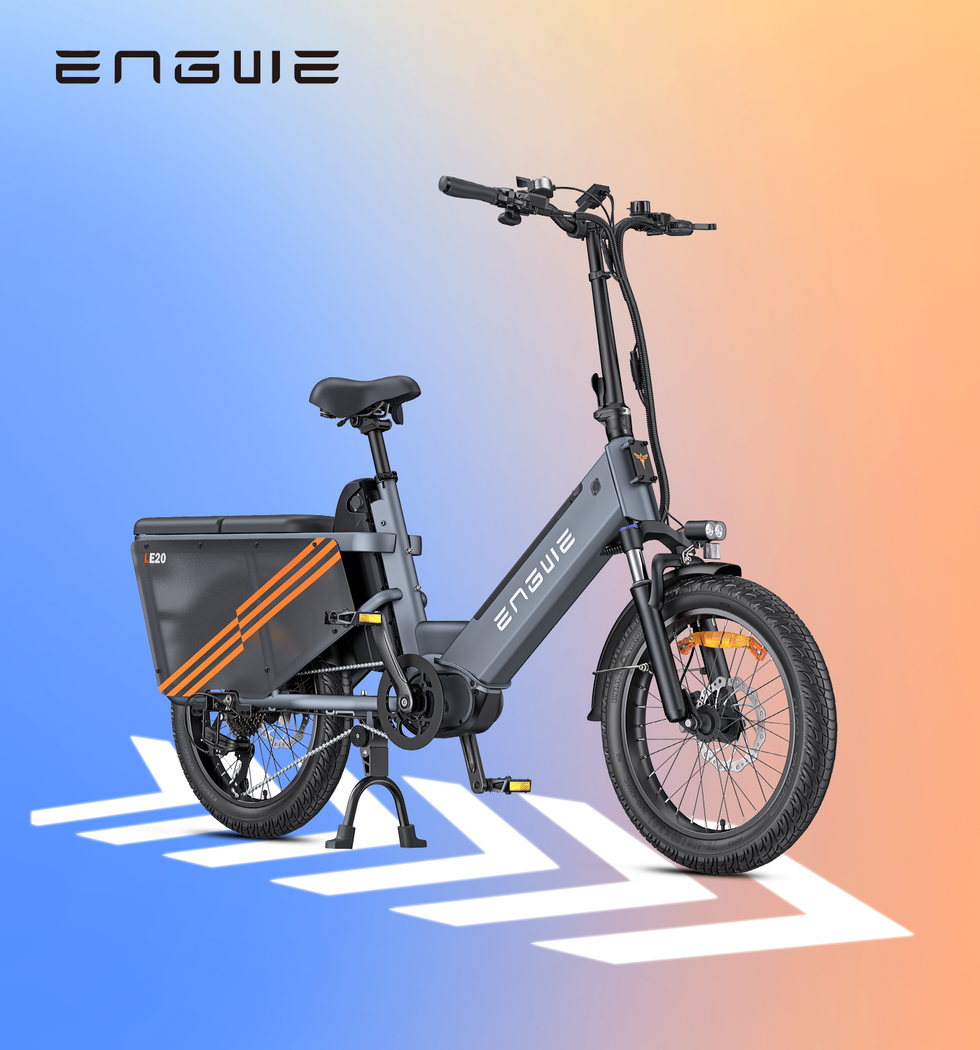
The All-in-One Solution: ENGWE L20 Boost
The most illustrative example of such a solution is ENGWE L20 Boost. The model uses a high-performance front fork for the fat tire e-bike segment that handles all diverse scenarios the vehicle could get into.

- Built-in solution. The fork is not just plugged in later; the engineers fully considered it. So the driving dynamics are perfectly developed, and the bike works just as well on the asphalt as in off-road conditions.
- E-bike conditions. Surely the internal components and design should withstand the extra forces that the fork receives from the pedal-driven motor.
- Setting tailoring. The smoothness of the fork is ideal for both road and off-road conditions. Such a balance is achieved so that the suspension is smooth enough to work on the trail and resistant enough not to receive maximum impact on every big stone. Thus, the fork itself is enough to make your bike perfect.
High-Performance Fork Upgrades: Air Suspension
Finally, the enthusiast who wants to take fat tire e-bike modification or construction to the next level should look into high-performance air suspension forks. While it is the most costly alternative, nothing else offers as much adjustability and as little weight. Shocks and struts work on compressed air, allowing the rider to easily adjust the fork’s rigidity to their weight and riding style using a simple (included) shock pump. The following are three suggestions:
-
RockShox Bluto.
As previously said, this fork is likely the only one users are familiar with in the fat bike world. It has hardy performance and time-tested Charger or Motion Control damper systems. When the Bluto is equipped with a lockout, it has two external tweaks: one for the return spring speed (the 'I can ride quicker on the highway' setting) and the second for descents (the 'I will not get my teeth knocked out on this descent' setting). It offers the ideal balance between rigidity and weight, attracting performance-oriented riders.
-
Manitou Mastodon Pro.
In terms of torsional rigidity and cold-weather performance, this fork is admired most. It means that the Mastodon uses internal seals that remain malleable in freezing temperatures, whereas other forks become stiff and clunky. There are many different ways to tune it, including low and high-speed compression damping.
-
Wren Sports Inverted Fork.
From a rigidity and a look angle, Wren inverted forks are at the top of the heap. By having the strut at the base and the spring at the top, it reduces the mass of the fork that has to go up and down as the fork compresses. These may be adjusted to handle the harshest of riding conditions. Air forks should be set up by first adjusting the sag to 20-25% of the total fork travel according to the manufacturer’s instructions.

Durable & Affordable Upgrades: Coil Suspension
If durability, simplicity, and value are your main concerns, a decent coil-sprung suspension fork is a suitable option. A steel spring, rather than an air chamber, is used in these forks to absorb impacts. This makes them heavier than an air-sprung fork but provides a remarkably smooth and linear feel and outstanding small-bump performance. The added performance comes with the added advantage of a less frequent need for servicing, meaning that the relationship is 'set it and forget it' for many riders.
A Few Recommendations:
- RST Renegade: a versatile fork that does its job without the complexity or price of a top-end air fork. This fork is also well-liked by e-bike manufacturers because it is a simple and rugged option with less hassle. It’s worth noting that many of these products’ basic modifications, such as preload and a simple lockout for smooth surface riding, are also more than sufficient.
- SR Suntour Zeron/Aion. Their fat bike fork models: This high-quality suspension manufacturer is well-known for creating solid and reasonably priced forks. The fat bike offer has been beefed up with strong stanchions and the same internals as higher-performance forks to handle the extra weight and stress of e-biking. This fork provides a controlled and smooth ride that is also enjoyable.
Money-saving hint: The truth is that the proper coil fork will provide a fantastic riding experience for many recreational and trail users. A less expensive coil fork can be a terrific first-choice upgrade since it will allow you to save enough money to upgrade other areas where your money can go further.
The Pre-Purchase Checklist: Ensuring Compatibility
Again, the most important thing to keep in mind while selecting a fork for your fat-tire e-bike is that all the fork’s technicalities are compatible with your frame and wheelset’s specifications. Otherwise, the unpleasant situations may vary from a fork being impossible to install to a completely unsafe bike. That is why, to be clear about the correctness of your choice, start with the following list of most important features to check. The main characteristics to start with are:
- Steerer tube – It is the tube passing through the frame's headtube. The main things here are overall diameters, such as Straight 1 1/8” vs. Tapered 1 1/8” top to 1.5” bottom. A fork with a tapered tube will not fit a straight headtube frame. These features are very important criteria.
- Axle standard – It is how your front wheel attaches to your fork. Currently, the most common standard for modern fat bikes is the 15x150mm Thru-Axle. This standard allows for achieving good stiffness versus the old 9x135mm Quick-Release standard. Your new fork's axle standard should fit your front hub.
- Suspension travel – This means how much the wheel can compress into the fork. The normal range for a fat bike fork is 100-140mm. Choose the same travel for your new fork as the frame allows to prevent altering your geometry and handling.
- Brake mount – Make sure you receive the correct mount for the brake caliper. For all modern forks, it should be Post Mount. You may need an additional adapter for a brake disc of a different size.
| Characteristic | Standard Specification | Importance |
|---|---|---|
| Suspension travel: | 100mm – 140mm | Ensure it is the right length for your frame’s geometry |
| Steerer tube: | Tapered, down from 1.5” to 1 1/8” | Must fit your electric bike’s headtube at all costs |
| Axle standard: | 15×150mm Thru-Axle | Should match your front wheel’s hub to install the fork properly |
| Adjustments: | Rebound, lockout, compression | More options allow for a well-tuned ride |

Installation, Maintenance, and Final Thoughts
In conclusion, to get the best return on your money and ensure your safety, proper installation and regular maintenance are a must. Even the most top-of-the-line fork will ride badly if it is not correctly installed or serviced afterwards. The following steps can help you prolong the life of your suspension fork while getting the most from it:
Installation – DIY or Pay for Professional:
- DIY: Fitting a fork necessitates a few specialized instruments, such as a headset press, a crown race setter, a pipe cutter to cut the steerer tube, and a star nut installation tool. This is a high-stakes job; cutting the steerer tube too short can be a costly mistake. Measure at least twice, and then cut once, leaving enough room for your stem and spacers.
- Professional: For the majority of riders, having a local bike shop conduct the installation is preferable since they have the specialized instruments and experience required for a safe installation and will torque every bolt down correctly. The small fee is worth the peace of mind, trust me.
Routine maintenance tips:
- Post-ride wash: Using a soft rag, clean the fork stanchions – the slick top tubes. This will prevent dirt from being pulled into the fork’s internal seals, which can lead to premature wear.
- Check your settings before each ride. Be aware of the air pressure in your fork or shock, as well as the rebound and compression settings, as they can be inadvertently changed.
- Follow the Service Intervals. Suspension forks require service. A 'lower leg service' – where a professional cleans and renews the oil in the lower part of the fork – is generally advised every 50 hours of riding. A full damper rebuild is advised every 100-200 hours. Indeed, this is the single best method to give your fork a long life.
Frequently Asked Questions
-
Can I put just any fat bike fork on my e-bike?
No. It would be best if you made sure the fork is 'e-bike rated,' meaning it’s engineered to withstand the additional weight and forces. Most importantly, the steerer tube type and the axle standard must fit your frame and front wheel perfectly. -
Is an air fork always better than a coil fork?
Not really. Air forks are lighter and more tunable, making them great for performance-oriented riders. On the other hand, coil forks are more durable, require less maintenance, and are usually cheaper, making them a top choice for most riders. -
How much suspension travel does a fat tire e-bike need?
A proper travel range is between 100mm and 120mm, offering ample comfort and control for most all-purpose riding, including simple trails, gravel riding, and commuting, without negatively impacting the bike’s geometry.
Your choice of a suspension fork can drastically improve your ride – invest wisely.