
One of the most significant decisions you can make as a rider is whether to buy a hardtail or upgrade to a full-suspension mountain bike. Upgrading is a massive financial commitment for many people, as it costs a lot of money, and it raises the question of whether the investment in additional complexity and price justifies the improvement in trail performance. In this guide, I’ll explain the need to upgrade from five different elements so you can pinpoint the exact reason you want to upgrade and determine whether you really need one for the type of riding you’ll be doing. Let’s start with the first element.
1. Performance & Topology
The most noticeable difference between a hardtail, which only has front suspension, and a full-suspension bike, which has both front suspension and a shock absorber, is how they react to the trail. Each type of bike outperforms the others in distinct environments. Before you decide, you should select the best conditions for your bike’s capabilities. A hardtail bike features a firm rear end that offers a linear, highly reactive interaction with the surface. This makes a hardtail bike the ideal candidate for fast-paced, smooth surfaces. On the other hand, a full-suspension bike is built to absorb chaos, allowing you to maintain speed and control when ground conditions deteriorate.
Hardtail Strengths
- Climbing Efficiency: You may ride hard and fast on a firm finish.
- Responsiveness: A direct and connected feel to the trail.
- Lighter Weight: For any given price, hardtails are lighter thanks to fewer components.
- Line Choice: Forces the rider to choose smoother, more efficient lines.
Full-Suspension Strengths
- Technical Descending: First and foremost, it is much more capable on technical descents. The rear suspension absorbs impacts from rocks, roots, and drops, keeping the rear wheel planted. Exploding down a descent is much safer and smoother. This allows you to be in control and carry more speed and confidence over rocks, roots, and drops.
- Improved Traction: On technical climbs, the rear shock helps the rear tire to maintain better traction by being able to conform to the ground, rather than bouncing and skipping around.
- Mistake Forgiveness: It’s very forgiving of poor line choices. The rear suspension can smoothly suck up a hit or equipment failure that could send a hardtail rider completely off the trail.
- Ideal Terrain: Lastly, this option is for all-mountain, enduro, and downhill-only riding. Full-suspension is the best choice for technical, steep, and unpredictable terrain.
2. Comfort & Rider Fatigue
Second, and beyond just the performance aspect, is comfort and how much effort it takes to ride a given bike. Rider fatigue is another major consideration regarding how long you want to be able to ride, especially on day-long rides and rough sections. This is an area where full-suspension makes a massive difference. Where a hardtail rider is at best using their arms and legs as shock absorbers, a full-suspension bike is much better at dulling the constant chatter. This is a more substantial factor the longer and rougher the given ride is.
Full Suspension Comfort Advantages
- Reduced Body Strain: The rear shock absorbs countless small and large impacts that would otherwise travel up through the saddle and into your lower back and spine.
- Less Arm and Leg Fatigue: With the bike doing more of the work to smooth out the trail, your limbs don’t have to work as hard to absorb shock, keeping you fresher for longer.
- Smoother Seated Pedaling: You can remain seated and pedal through moderately bumpy sections where a hardtail rider would have to stand up.
Hardtail Comfort Considerations
- Requires Active Riding: You have to be far more dynamic, constantly shifting your weight and using your “body suspension,” as I call it, to navigate rough terrain.
- Tire Pressure is Key: Pro Tip: Hardtail riders can make themselves far more comfortable by running low tire pressure within a safe range and adopting tubeless setups. When run at lower pressures, the tire can deform and better absorb small bumps.
- Fatigue on Long, Rough Rides: By around two hours into a rough trail ride, the cumulative effect of vibration becomes noticeable and can lead to greater fatigue compared to a full-suspension bike.

3. Cost of Ownership & Maintenance
This factor could make or break the decision. Full-suspension bikes are not only more expensive to purchase but also more expensive to manage throughout their life. A hardtail frame is a simple, tough structure. A full-suspension frame is a piece of active machinery with a rear shock, pivots, bearings, and linkages that all require ongoing maintenance. Without that upkeep, it will perform progressively poorly and eventually undergo expensive reparations. Be realistic about your willingness to invest in ongoing maintenance, both in terms of time and money.
Financial Breakdown: Hardtail
- Lower Initial Cost: Barring a few outliers, hardtail frames for the same money will come with better drivetrains, brakes, and forks.
- Minimal Frame Maintenance: One of the largest sources of bike maintenance, frame pivots and bearings, doesn’t exist for a hardtail.
- Lower Service Costs: Your annual $200 service might just cover your front fork, and skipping the rear shock makes your biannual $400 service a thing of the past.
Financial Breakdown: Full Suspension
- Higher Initial Cost: Fully suspended bicycles are more complex than hardtails, and a rear shock is expensive to manufacture.
- Essential Pivot and Bearing Service: Frame pivots contain bearings that will wear out and need to be replaced regularly for your suspension to feel pliable. This is a specialized job and can be very expensive.
- Mandatory Shock Service: Your rear shock needs to have an “air can” service every 50 hours of riding and a full damper service annually (200 hours), making the cost of your bike ownership shoot up over time.
Money-Saving Tip: Numerous basic maintenance items, such as an air can service or checking pivot bolt torque, can save the average consumer hundreds of dollars in maintenance and usage costs over the life of a full suspension bike. Watch reputable sources on YouTube for tutorials on how to perform bike maintenance, but steer clear of unsafe maintenance techniques.
| Key | Hardtail | Full Suspension |
|---|---|---|
| Initial Cost | Lower | Higher |
| Maintenance Complexity | Low | High |
| Key Maintenance Points | Fork service | Fork, rear shock, pivot bearings |
| Weight | Generally lighter | Generally heavier |
| Frame Simplicity | High | Low |
4. The E-Bike Factor: A Game Changer
The emergence of the electric bike has offered an intriguing new point in this debate. An e-bike’s motor effectively nullifies both of a full-suspension system’s prime drawbacks: weight and pedaling inefficiency. The motor’s support nullifies the added mass from the suspension, and the wasted strength suffered from “pedal bob” is entirely negated. Practically, a full-suspension electric bike is an enormously reliable and engaging option: it allows riders to rapidly go up difficult mountains and go down more easily and confidently, understanding the benefits of dual suspension in a way that couldn't be done otherwise. It renders difficult landscapes more accessible and more enjoyable for individuals. For those thinking about acquiring an e-bike, the full-suspension argument grows practically irrefutable.
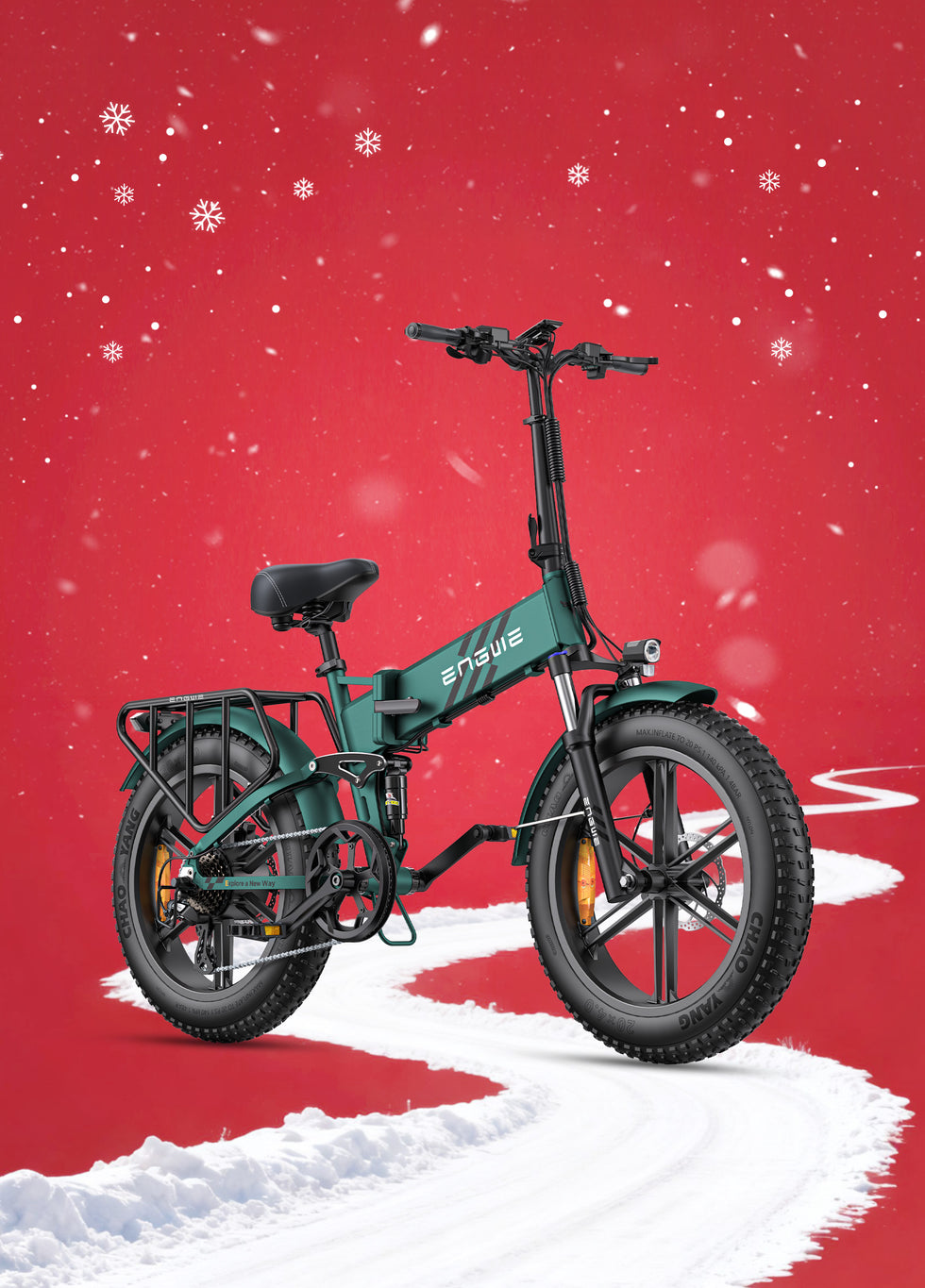
The Ultimate All-Terrain Solution Exists: ENGWE E26

When it comes to the perfect blend of all these traits while aiming for the top, the ENGWE E26 stands out. In turn, this all-terrain electric bike offers a solution that makes the upgrade to full suspension an unbeatable move. The 2X dual travel suspension system in the front and rear, combined with 26x4.0 fat tires, is good for big miles in even the roughest areas, providing a stable and consistent riding experience on the most technical trails. The powerful 250W brushless motor generates 70Nm of torque, allowing riders to smoothly ride up steep hills, while a high-energy 48V16Ah battery provides up to 140 km of range. This means you’re just constrained by your own laziness, just weighed down by your own creativity. With responsive hydraulic disc brakes, a 7-speed Shimano drivetrain, a rugged rear rack, and an easy-to-read LCD display, the ENGWE E26 will check all the right boxes. This isn’t just any bike—it’s a compact e-bike, a key tool for seeking out and discovering. Then, the robust full-suspension e-bike is engineered well for its price.

Who Should Choose Which Type?
If you are in the market for a new all-terrain mountain bike and aren’t sure which to buy, use the details above to select between a hardtail and full suspension.
- Choose a hardtail if you’re on a budget, ride mostly fast and flowing tracks, dislike long maintenance tasks, or you want to work on your bike management capabilities while you’re still developing.
- Select full suspension if you want to go to the next level of biking and jump on rough terrain with complete trust, you want to ride all day without your hands going numb and teeth chattering over every pothole, or you are purchasing an electric bike and desire its adaptability in the wild. Recognize that full suspension is worth it.

5. Skill Development & Riding Style
Lastly, one should consider how each bike type molds you as a rider. There’s a common phrase in the mountain bike community that “hardtails build character.” That’s because a hardtail, which is less forgiving, teaches you to become a better rider. You learn to ride the smoother lines, to allow your body to absorb impacts instead of your bike, and to be more precise on the bike. A hardtail is a great teacher of the basics. A full-suspension bike is what I’d describe as a “confidence builder.” It helps you go into more advanced trails before “earning” it and to take risks with a larger safety cushion. It encourages a very aggressive “go-go-go” type of riding where you just point and shoot, and the bike will take care of the rest.
Why Hardtails Build Skill
- Line Choice is Important: You will quickly learn that you must have your eyes pointing ahead on the trail to pick the fastest lines over obstacles to stay fast. This is a great skill that translates perfectly to any bike, or you will lose precious time. Hardtails force you to scan the trail ahead.
- “Lightness”: You’ll learn quickly that you must “unweight” your bike over obstacles to not hang up on it and have the flow of your body translate to the bike. You must flow with the trail instead of plowing.
- Bike Control: For a skittering bike that wants to leap off in all directions, a hardtail forces your balance and bike handling skills to a fine edge.
How Full Suspension Boosts Confidence
- More Margin for Error: The suspension will save you from falls that would happen on a hardtail if you made the same mistakes and will encourage you to try more aggressive features.
- Increased Speeds: Not only are you faster at your max speed, but you are faster overall, and that is the most fun part of having full suspension. You can take lines faster.
- Different Skills to Focus On: Instead of focusing on traversing over bumps, you can use the saved energy to ride aggressively in loamy corners, shred off jumps, and brake super-hard down a steep hill.
Your Final Verdict
Is a full-suspension bike better? Of course, a high-quality hardtail is much better than a “cheap” full-suspension bike. "Better" means better suited to the trails you ride most of the time, your budget, and how you want to ride. Can a full-suspension bike make you faster? On technical descents – absolutely. On smooth climbs or flat trails, the hardtail rider of the same level of training and fitness will be faster, because their bike weighs less and the drivetrain is stiffer. Which way to choose? Choose a bike based on the 80/20 rule: buy for the 80% of riding you actually do, not the 20% you aspire to do. Do not choose a long-travel enduro if you only ride on gentle forest paths. Buy based on your real mountain biking lifestyle, not your ambition. Ultimately, for people who care about cushioning and the desire to ride on increasingly difficult trails, the upgrade is valuable.