
Essential Compatibility Checks for Your E-Bike Carrier
The challenge beyond regular for most bike racks is the transportation of a heavy, bulky fat tire electric bike. The mix of considerable weight, wide tires, and long wheelbases make this kind of carrier a specific niche in the market. This guide aims to provide you with the key facts you need to separate the wheat from the chaff, highlight recommendations from the summit of the market, and take away the necessary information to ensure that, for your loved e-bike, you choose the best carrier you can get. The most fundamental dimension you need to grasp as you begin your quest is basic carrier-compatibility with the vehicle and bike. The rest of the features are moot if there is a mismatch here – and first and foremost, you need to make sure of these unalterable criteria before you even begin to look at brands. It is the skeleton of a carrier system that is safe and secure for transportation. A carrier not rated for your bike’s weight or that does not suit your car’s hitch is not just an annoyance, but a safety risk on the road.
-
Hitch Receiver Size and Class:
Your vehicle will have either a 1.25-inch or 2-inch hitch receiver. Given the weight of fat tire e-bikes, a 2-inch receiver is strongly recommended; many high-capacity carriers will require it. A crucial tip: your vehicle’s maximum tongue weight, which indicates the downward force the hitch can support, is always in the owner’s manual. This number must exceed the combined weight of your carrier and your e-bike.
-
Per-Bike Weight Capacity:
This is the most important figure on this list. Fat tire e-bikes can weigh as much as 60 to 90+ pounds. For your actual bike weight, search for a carrier with a per-bike capacity that considerably exceeds it. Never attempt to “test the limits,” since road bumps and external forces can raise the stress on the rack to multiple times the bike's weight.
-
Tire Width and Wheelbase:
Most bike racks have trays that are not wide enough to accommodate four-inch or wider fat tires. Ensure the carrier’s description explicitly states that it can accommodate your tire’s width. Additionally, examine the carrier’s maximum wheelbase, which is the horizontal distance between the front and back axles, to accommodate your e-bike’s full length.
-
Frame Design:
Many fat tire e-bikes have step-through frames that are not compatible with frame-mount hanging racks. Platform-style carriers that secure the bike by the wheels are preferred, as they eliminate frame contact, protect paint, and accommodate unconventional frame shapes.
Key Features to Look for in an E-Bike Carrier
Though far from the basic criteria of compatibility, the properties of a carrier, such as its layout, features, and form, should be considered when making the purchase. A system that is simple to load and use removes concerns about security and makes handling your e-bike a simple task rather than a dreaded one. Whether you are on a budget or looking for premium features for your heavy e-bike, these are the main features you need to be mindful of. For fat-tire e-bikes, most cyclists buy the industry-standard platform design. They provide a stable base for the wheels, and many use ratcheting arms to tighten around the tires or frame. Many of these designs offer a far more secure and stable ride than other types of carriers.
Tilt and swing-away features are also critical. A hitch rack that can tilt away or swing to the side to provide trunk or cargo area access without removing the bikes is desirable. Many models offer excellent clearance and versatility. This allows for easy access when you arrive. Integrated or optional ramps are commonly available. A 75-pound e-bike is heavy and difficult to lift. Most e-bike-specific carriers include optional built-in ramps that allow you to easily roll the bike up onto the platform. This has been a game-changer for many users. Most importantly, a high-quality security system is essential for any carrier. Most secure the rack to the hitch with a locking pin and the bike to the rack. This system deters theft and prevents the need to buy and keep track of multiple separate locks.

Top Recommended E-Bike Carriers on the Market
While the market can be a difficult one, some brands stand out in their commitment to high quality, useful features, and astonishingly tough build quality. They offer over-the-top features, and many are made to fulfill the demands of heavy e-bikes with fat tires. Although these products can be costly, they are very dependable and should provide decades of worry-free usage. Following that review, I’ve picked a number of the most reputable brands and established a few metrics: how much they can carry, how simple they are to operate, and how well they are made.
-
Kuat NV 2.0:
The NV 2.0 is typically viewed as the gold standard of the platform rack segment due to its high-quality build, well-thought-out design, and solid feature set. The front tire cradle is adjustable, and the whole assembly pivots up and down effortlessly, thanks to a foot-actuated pivot system. It even includes a built-in work stand for on-trail repairs.
-
Thule T2 Pro XTR:
This is another high-end alternative to the Kuat which is well-regarded and known for its ergonomic advantages. The wide spacing between bicycles to prevent contact and the generous handle on this hitch-side mechanism, which Thule dubs the HitchSwitch lever, make it easy to lower the rack even when bikes are installed.
-
1UP USA Super Duty:
This metal monolith is well-known for its excellent build and rugged, no-nonsense style. It’s ideal for bikes with sensitive frames or unique paint jobs because the structure only touches the tires. Bike trays are modular, allowing you to add or remove them whenever you like without tools.
-
Hollywood Racks Sport Rider for Electric Bikes:
The Sport Rider is designed explicitly for e-bikes and is a little more affordable option, providing excellent value for money. It boasts high carrying capacity and comes standard with a locking hitch pin and a security wire.
To sum up all of the information provided, here is a comparison table.
| Rack Model | Max Weight Per Bike | Max Tire Width | Key Feature | Price Point |
|---|---|---|---|---|
| Kuat NV 2.0 | 60 lbs | 5" | Foot-actuated pivot, integrated work stand | Premium |
| Thule T2 Pro XTR | 60 lbs | 5" | Ergonomic HitchSwitch lever, wide spacing | Premium |
| 1UP USA Super Duty | 75 lbs | 5" | Tire-only contact, all-metal, modular | Premium |
| Hollywood Racks Sport Rider for E-Bikes | 80 lbs | 5" | High capacity, e-bike specific, included locks | Mid-Range/Value |
*Note: The majority of the information on the competitors’ features can be found in video reviews since I could not locate all of them on the corporate websites.
The Perfect E-Bike for Your New Carrier
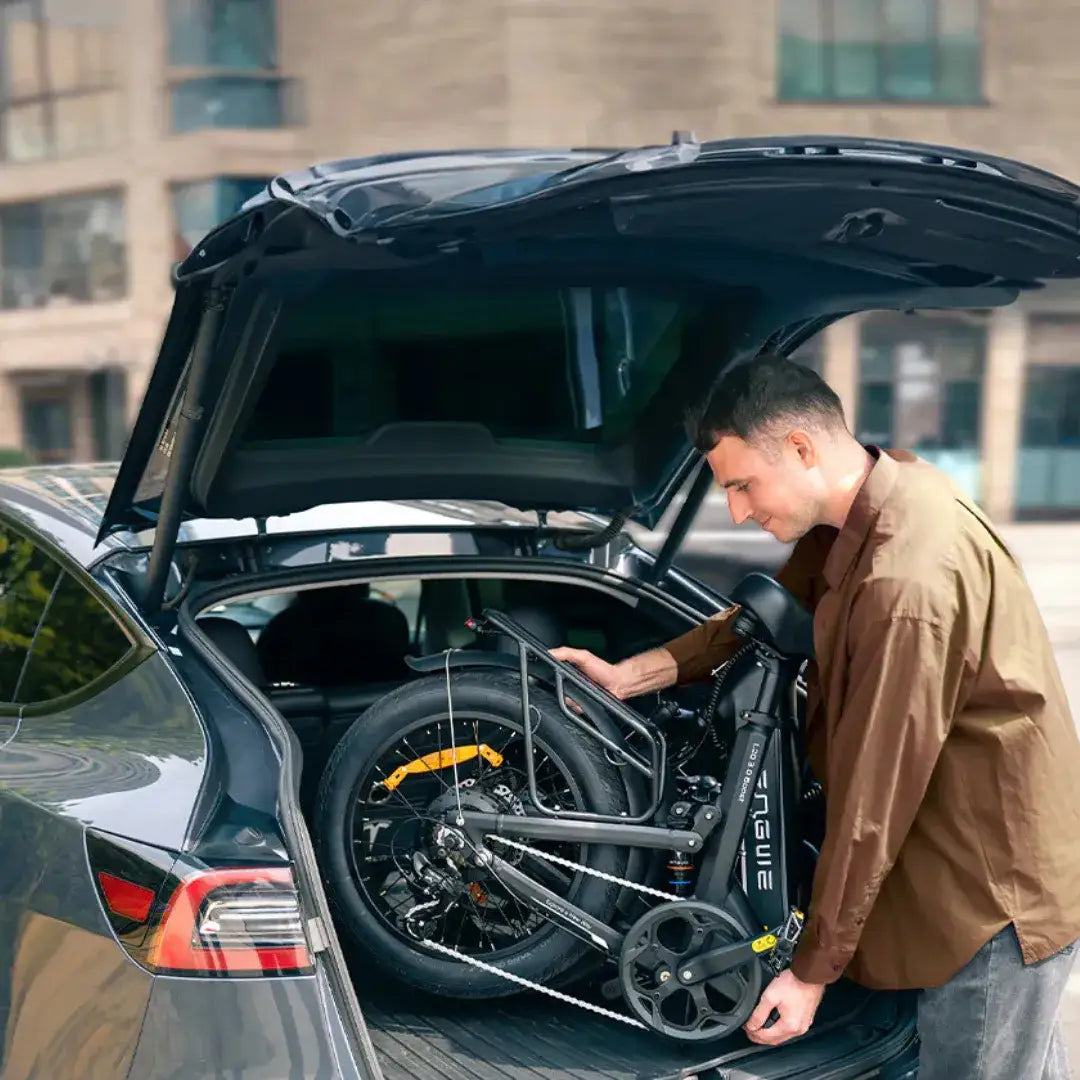
""Now that you have found the ideal carrier, you need an equally fantastic electric bike that would go above and beyond your expectations. The ENGWE Engine Pro 3.0 Boost is the ultimate package you are looking for in a bike. With this on-demand e-bike, you are ready to hit the road anywhere you so desire. It is an all-terrain beast that has been engineered with people like you in mind. You can ride it on the rough mountain roads and at the beach for riding on the sand. Its brute force, remarkable performance, and sturdy build make it robust, ensuring that every ride is a great experience. As for weekend trips, the ENGWE Engine Pro 3.0 Boost is the perfect equipment to carry on your rack.

It has several features such as:
– Unparalleled strength – its powerful motor packs a powerful punch of up to 1200W, providing massive torque while climbing steep inclines.
– All-terrain king – It has colossal 20x4.0 inch fat tires with front hydraulic and air suspension, allowing you to ride without fatigue.
– Stamina and reliability – the battery provides an excellent range of up to 100 miles, while the hydraulic disc brakes will allow you to stop in any conditions.
Ownership Tips: Installation, Safety, and Maintenance
Finally, having the proper equipment is not always sufficient. Responsible setup, proper maintenance, and intelligent use are all critical factors. Some good habits and checks may prevent costly problems with your carrier, e-bike, or your own vehicle. Being proactive as an owner can save you some money in terms of the entire experience, and it could also help guarantee that your journeys both begin and end smoothly. These are some useful pointers for getting the most from your carrier:
-
Installation Best Practices:
Most importantly, read the provided manual thoroughly. Installation can be done with the help of a friend as the rack is heavy. Finally, make sure to tighten all bolts to the recommended torque specification. After your first drive, re-torque all connections to ensure nothing is loosening.
-
Pre-Drive Safety Checklist:
Also, check the rack before every drive. Move the rack from side to side to ensure the hitch connection is snug. Ensure the ratcheting arms fully secure the bike’s wheels and are locked. Verify all the straps are tight and the locks are functioning correctly.
-
Money-Saving and Maintenance Tips:
To save some money on the rack, it is best to wait for the off-season. Purchasing during winter or at the end of summer can save you a considerable amount. Maintenance can be done by cleaning the rack regularly, lubricating all moving parts, and inspecting all movable parts and the rubber components. Storing the rack indoors when not in use will extend the rack's life.
Q1: Can a cheaper hanging-style rack be used for a fat tire e-bike?
Hanging-style racks are not recommended. This type of rack can easily damage sensitive components and might not fit step-through frames. Additionally, hanging-style racks are also almost never rated for the high weight capacity required.
Q2: Should a lighting board or license plate holder be used?
Depending on local laws, an auxiliary lighting board is mounted to the back of the rack if the carrier with the bikes obstructs the car’s lights or license plate.
Q3: How do I know how much weight my car’s hitch can handle?
A: Check your vehicle’s owner’s manual, which should have a “maximum tongue weight” number. This number is crucial; it must be greater than the weight of your carrier, plus the weight of all the bikes you will be carrying. If you know these key components, you can shop comfortably knowing that your future adventures will be safe and secure for years to come.