
Your Comprehensive Guide to UK-Legal 250W E-Bike Conversion Kits
Starting your journey to transforming your favorite bicycle into an electrically powered machine full of power and speed sounds very exciting. But then, what should you do when it comes to the terrifying market for a fully built, UK-legal 250W e-bike conversion kit? The answer can be found in legal regulations, a variety of technologies, and the optimal top choices. This article will present a full 5-dimensional walkthrough, which will give you everything you need to know to make the right, full-of-confidence, and legal choice.
The following are the minimum stipulations to be complied with before starting the build. For your converted bike to be legally ridden on UK roads, it must still be referred to as an ‘electrically assisted pedal cycle’ (EAPC). To be road-legal without requiring registration, tax, insurance, or a license, it must adhere to the EAPC regulations below. This kit provides the foundation for an amusing and legal project. A kit ought to include everything necessary to upgrade your bike, eliminating the necessity for additional parts to be bought or manufactured.
UK Legal Requirements (EAPC Rules)
- The motor output must not exceed a continual power output of 250 watts.
- When a vehicle is driven at more than 15.5 mph (25 km/h), electrical assistance must be disconnected.
- The motor must engage when the bike is being pedaled; it is not a ‘twist-and-go’ throttle from a standstill. However, a throttle is authorized for assistance up to 6 km/h (3.7 mph).
- The motor must be marked with its power output and the manufacturer’s name.
Core Components of a Complete Kit
-
Motor:
- Hub motor
- A mid-drive motor
-
Battery:
- A lithium pack. The battery is used as the main source of power. The pack voltage and Amp-hours determine the power range and delivery.
-
Controller:
- The ‘brain’ of the system, managing power consumption from the battery and delivering the power output to the motor.
-
Display Unit:
- Mounted on the bike’s handlebars to provide on-the-go information on the battery’s charge and the rate of power assistance.
-
Sensors:
- Triggers the motor to engage when you start pedaling.
-
Wiring Loom:
- The wiring that connects all the components together.
Choosing Your Motor: Hub vs. Mid-Drive
Potentially causing traction loss on the rear wheel in such a way that the wheel spins on steep climbs. Your motor choice is probably the most fundamental technical choice you will have to make. Besides fully defining your electric bike’s performance, your choice of motor will also shape its feel and balance. Before deciding on what type of motor you want, make sure to consider your commute, the hills you face, and your mechanical skills. After all, not all motors have the same prerequisites.
Front Hub Motors
- Pros: Easiest to install. In most cases, you will only need to replace the front wheel. Creates an “all-wheel-drive” effect. Can be used with nearly all internal gear hubs on the rear wheel.
- Cons: Can make the steering feel heavy. Less traction on loose or wet surfaces, which might lead to wheel spin.
Rear Hub Motors
- Pros: The feeling of a traditional “push,” like a motorbike. Better traction – in most cases, the center of gravity is closer to the rear wheel. Less obvious, visually speaking.
- Cons: Tucks in with the drivetrain, so extra care needs to be taken. More challenging to replace a rear tire.
Mid-drive Motors
- Pros: Power is transferred directly through the crank, allowing it to leverage the bike’s installed gears. Most efficient on steep rides. Balanced and centers the weight on the bike, unlike other options.
- Cons: Most expensive. Complicated installation, requiring removal of the bottom bracket. Marginally faster wear on the chain and cassette.

The Pre-Built Alternative: The ENGWE E-Bike
However, a purpose-built e-bike with a frame designed with every component included—for instance, an ENGWE bike—buys familiarity and frees you from the initial hassle. You are no longer forced to purchase the perfect battery or drill new holes to fit the motor properly. Go shopping for an e-bike with premium features that will perform impeccably out of the box, and a pro-style e-bike like the ENGWE L20 3.0 Pro is the natural answer.
Why Should You Buy an ENGWE L20 3.0 Pro?
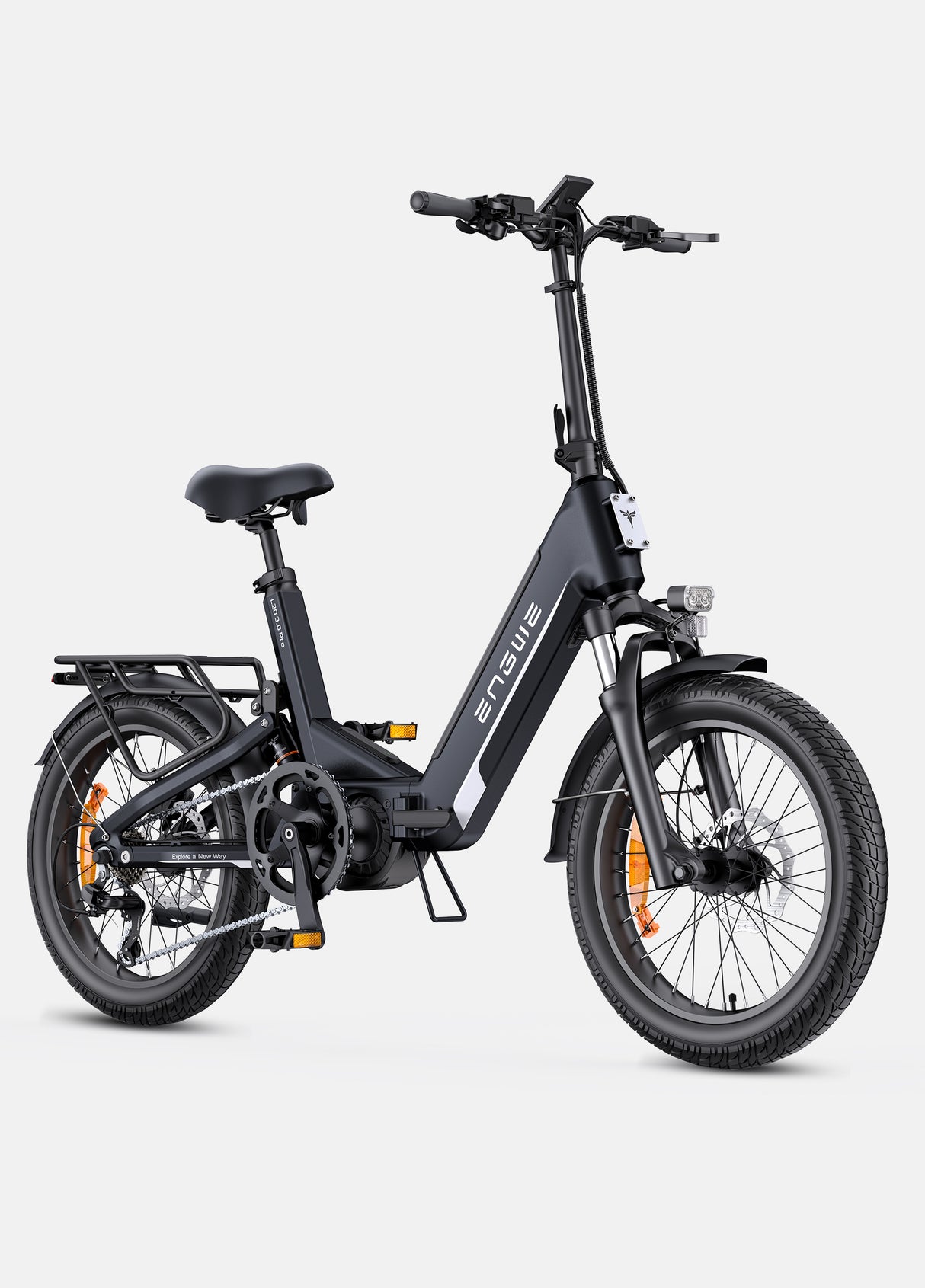
- Superior Integrated Power: The legal 250W Mivice mid-drive motor produces a whopping 100Nm of torque, providing epic natural acceleration and climbing performance perfectly tuned to the high-quality aluminum frame and Schwalbe Super Moto tires.
- Exceptional Range and Fast Charge: With a lab-verified 160km range thanks to the 720Wh Samsung battery and an 8A fast charger, you won’t have to wait long to get back on the road.
- Fat Tires and Rims: The bike features large 20x4 inch fat tires on beefy, long-running rims for an impressive look and stable ride.
- Advanced Features: The ENGWE IoT Module integration provides full smart electronic lock integration via GPS tracking.
- Comfort and Shock Absorption: The step-through frame design includes a suspension system that absorbs vibrations, eliminating up to 90% of the bounce felt on city streets.

Top 3 Recommended Conversion Kit Brands
Although most buyers may opt for the DIY route, which has proven quite popular due to reliable performance and a supportive community, consider buying from authorized UK dealers. Below are three highly recommended conversion kit types to buy. Each one is for a slightly different user, from the tech-savvy tinkerer to the plug-and-play commuter:
- Bafang – BBS01B 250W: This mid-drive kit is described as the gold standard among e-bike conversion kits, very popular due to its reliability and numerous available customizations using a programming cable. This kit provides high-torque power, perfect for climbing and balanced loads thanks to a nice, weighty feel. Before buying, it is important to confirm that it comes pre-configured for the UK and is not rated above 250W.
- Swytch Bike: The second option is for those that want a simple and lightweight solution. This all-in-one kit is famous for having the controller installed inside the battery pack, which is mounted on the handlebars along with a front hub motor. It enjoys simplified mounting techniques, which clients adore.
- TSDZ2 Torque Sensing Mid-Drive: Furthermore, Tongsheng is also a reliable company, known for its torque sensor integrated directly into the motor, resulting in an intuitive and natural ride as assistance is proportional to your pedaling effort.

Final Checks and Frequently Asked Questions
Lastly, while a successful conversion is achievable, it doesn’t end there. You should also be cognizant of your bike’s compatibility, budget for potential additional costs, and intended use when purchasing. A little effort in planning a purchase can save enormous money, time, and annoyance. Before you hit the “purchase” button, think about your bike’s measurements and current condition. Consequently, a sturdy frame and adequate brakes are critical to stay safe. Provided is a summary of the at-a-glance UK EAPC regulation table.
Pre-Purchase Compatibility Checklist:
- Bottom Bracket: For mid-drives, measure your bottom bracket shell width and determine its type (e.g., BSA threaded).
- Dropout Spacing: For hub motors, measure the distance between your front or rear dropouts to ensure that the motor axle will fit.
- Brake System: Check if the brake levers that the kit provides (often with a motor cut-off sensor) will work with your hydraulic/mechanical brakes.
- Frame Integrity: Especially for older bikes, your frame should be made from a robust material, such as steel or aluminum, and be in good condition.
Smart Buying and Budgeting Tips:
- Look Beyond the Sticker Price: Anticipate the cost of new tools you may need, such as a crank puller or cassette tool, upgraded brake pads, or even professional fitting if you do not trust your abilities.
- Quality First: Paying a little extra for a high-quality kit from a reputable dealer with a UK warranty means you will be saving more on repairs and replacements later.
- Timing is Key: Particularly during the non-peak season or holidays, deals like Black Friday can score you a significant discount.
| UK EAPC Regulation | Specification |
|---|---|
| Maximum Continuous Motor Power | 250 Watts |
| Maximum Assisted Speed | 15.5 mph (25 km/h) |
| Throttle Rules | Not permitted from a standstill; 'walk assist' up to 6 km/h (3.7 mph) is allowed. |
| Motor Marking | Must display manufacturer's name and power output. |
Frequently Asked Questions:
-
Do I need to register my converted e-bike in the UK?
– No, as long as it complies with all the specific EAPC regulations stated above, your converted e-bike acts like a regular bike and therefore does not require registration, tax, or a license. -
Can I install an e-bike conversion kit myself?
– Yes, you can, given that you possess some comfort and expertise in how regular bike mechanics work. Hub motor systems are often more straightforward, while mid-drives are more complex installations. If unsure, seek out a professional bike mechanic. -
Is a torque sensor much better than a cadence sensor?
A torque sensor provides a more natural and responsive experience because it makes the motor match your pedaling effort. Additionally, it is also usually more battery-efficient in comparison to cadence-based motors. However, some people prefer cadence sensors because they are a simple on/off mechanism that provides power whenever you are turning the pedals. Knowing this information will help you enhance your journey to adapt to the future of cycling.