
1. Performance and Ride Feel
The most critical decision when selecting a fat tire electric bike is the choice of drive type, as this one component has the most significant influence on performance, handling, and overall ride experience. Given the three vital options, including front hub, rear hub, and mid-drive motors, understanding the fivefold differences is a must. The following Performance and Ride Feel comparison across five critical dimensions will allow you to match the design with your ride preference and potential use, from casual cruising to challenging off-road exploration. By far, the location of the motor has the most striking influence on how it feels to ride an e-bike. Each system has its own power-delivery feel, which affects everything from surge to cornering. Thus, the first step is to browse through each drive type and determine a personal choice. The best tip is to understand how the power feels when taking off and allowing it to pass a slight slope.
Front Hub Motors
- Sensation: It feels like the front is pulling the bike. This sensation is noticeable in each acceleration and seems like a relatively straightforward sensation that several riders like, while many others think it is unnatural for tight turns.
- Traction: The front-wheel-drive effect allows better steering on highly powerful surfaces such as gravel or snow because the front tire is pulled into the terrain.
- Drawbacks: It is generally easier to ‘spin out’ on lean surfaces like rain, gravel, or snow because the front wheel has less weight on it during a steep ascent. Moreover, it can also manage to make the steering feel quite heavy.
- Best for: Riders who prefer a fundamental design for relatively simple terrain.
Rear Hub Motors
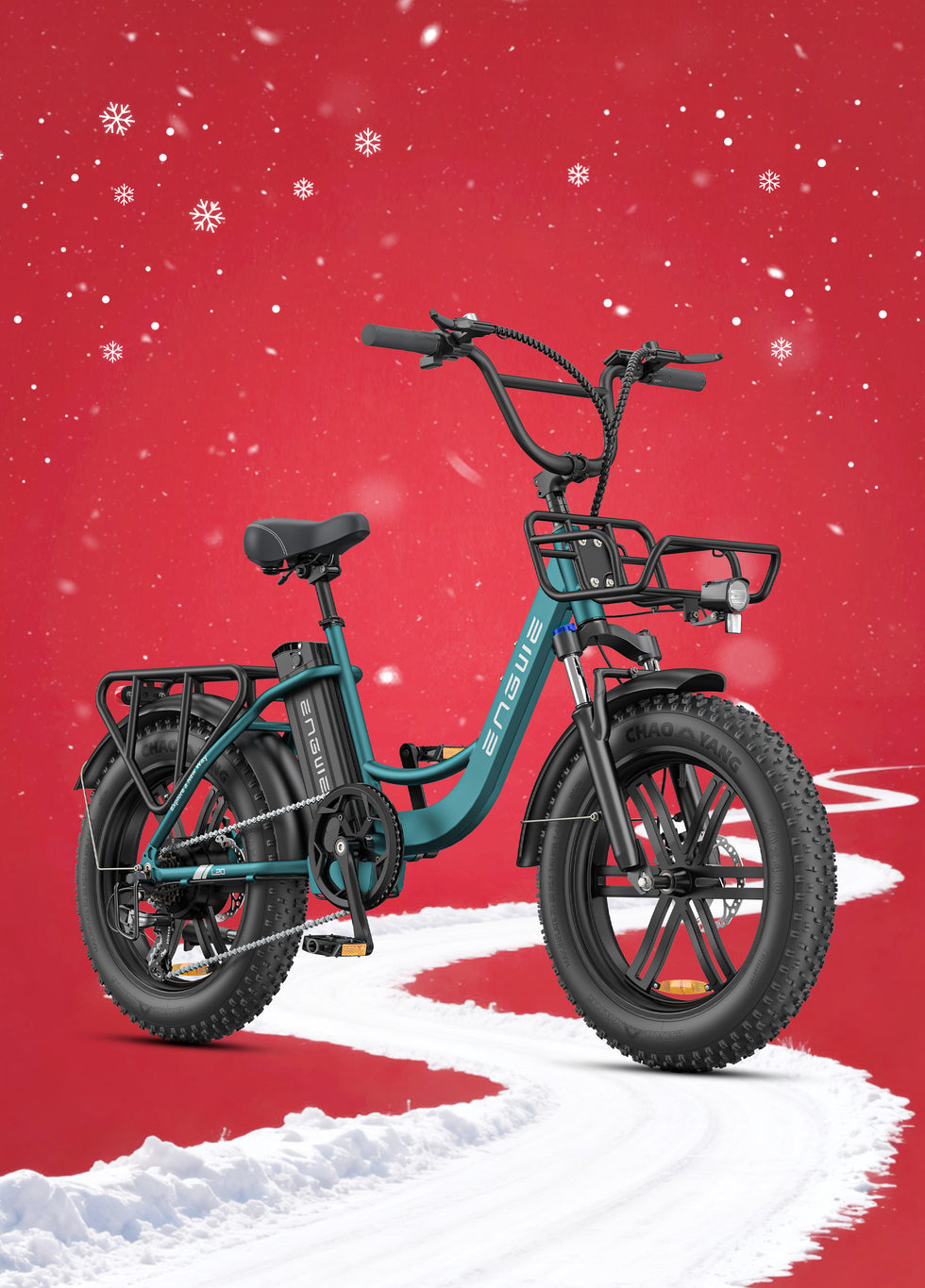
- Sensation: It’s the most traditional and hedonic feel, the closest thing to riding a powerful motorcycle or scooter. The push comes from behind, and the acceleration is immediate and relatively straightforward.
- Traction: Since as soon as you sit upright on the bike, your body is naturally positioned over the rear wheel; rear hub positioning is excellent for quick starts and most climbing positions.
- Drawbacks: Simple physics concentrate the weight on the bike’s very back, which can make the bike feel more difficult to balance when being lifted and make for a heavier fix when dealing with a rear flat.
- Best for: Most riders looking for that powerful, straightforward, “just drive it” feel for casual riding and urban commuting.
2. Terrain Suitability and Versatility
Fat tire e-bikes are made for versatility, but the drive system will tell you where they will truly shine the brightest. From flat city streets to the roughest mountain roads, there’s an environment where each type thrives. Matching your most frequently ridden environment to your drive system is a key user skill that will influence overall satisfaction and safety.
Front Hub for Flat and Loose Surfaces
- Urban Commuting: Front hub positioning is perfect for flat cityscapes where simplicity and no-brainer maintenance are key.
- Snow and Sand: The “pulling” action might be an advantage, as the front tire has to “climb” over the soft surface instead of digging in.
- Not Ideal For: Very technical off-road and steep hill climbing: the front wheel’s traction is poor and easily compromised.
Rear Hub for All-Around Power
The next compromise involves the rear hub, and it comes with a notable advantage: it allows for optimal power output. However, unlike the fusion of the other two motors, the rear hub doesn’t have balance and power. Thus, a model with this specific motor is a perfect match for mixed-terrain, general recreation experience, and for commuters as well. However, even the best power option isn't efficient for too long, steep sections – without gears, it will be a problem to balance the power. Therefore, the rear hub is compatible with any gradient, and if the road comprises all types of terrain, this alternative is incredible.
Mid-Drive Motors: The Premium Choice for Power and Control
Finally, mid-drive motors are an ideal opportunity for individuals who appreciate control, power, and balance between the other two possibilities. In this case, mid-drive provides an unmatched experience and control over the whole journey. This type of motor is suitable for mountain bikes as the center of gravity is low, and it assumes superiority on the rough roads. Moreover, when climbing steep hills, mid-drive can be less power-consuming. Since it attaches to the gear and pedal rotation, the rider can utilize the low gear, meaning that they use the engine’s full potential for torque and capability. Thus, the natural flow of riding is achieved by the implementation of a priority system dependent on the motor.
Superior balance. The centralized weight distribution allows the bicycle to achieve an excellent balance and handle predictably and responsively. Mid-drive allows for optimal on-the-fly adjustments through the bicycle’s gear range. Additionally, the motor works in synergy with the torque sensors to ensure good predictability. Moreover, when changing tires or in case of a puncture, the central drive can be drawn back and the spring removed so that both front and rear tires can be removed swiftly from the frame. Uniting all these benefits of control, aftermarket plan, and synergy between gear switching and power systems, the mid-drive electric vehicle becomes an excellent vehicle; poor performance is hardly possible.
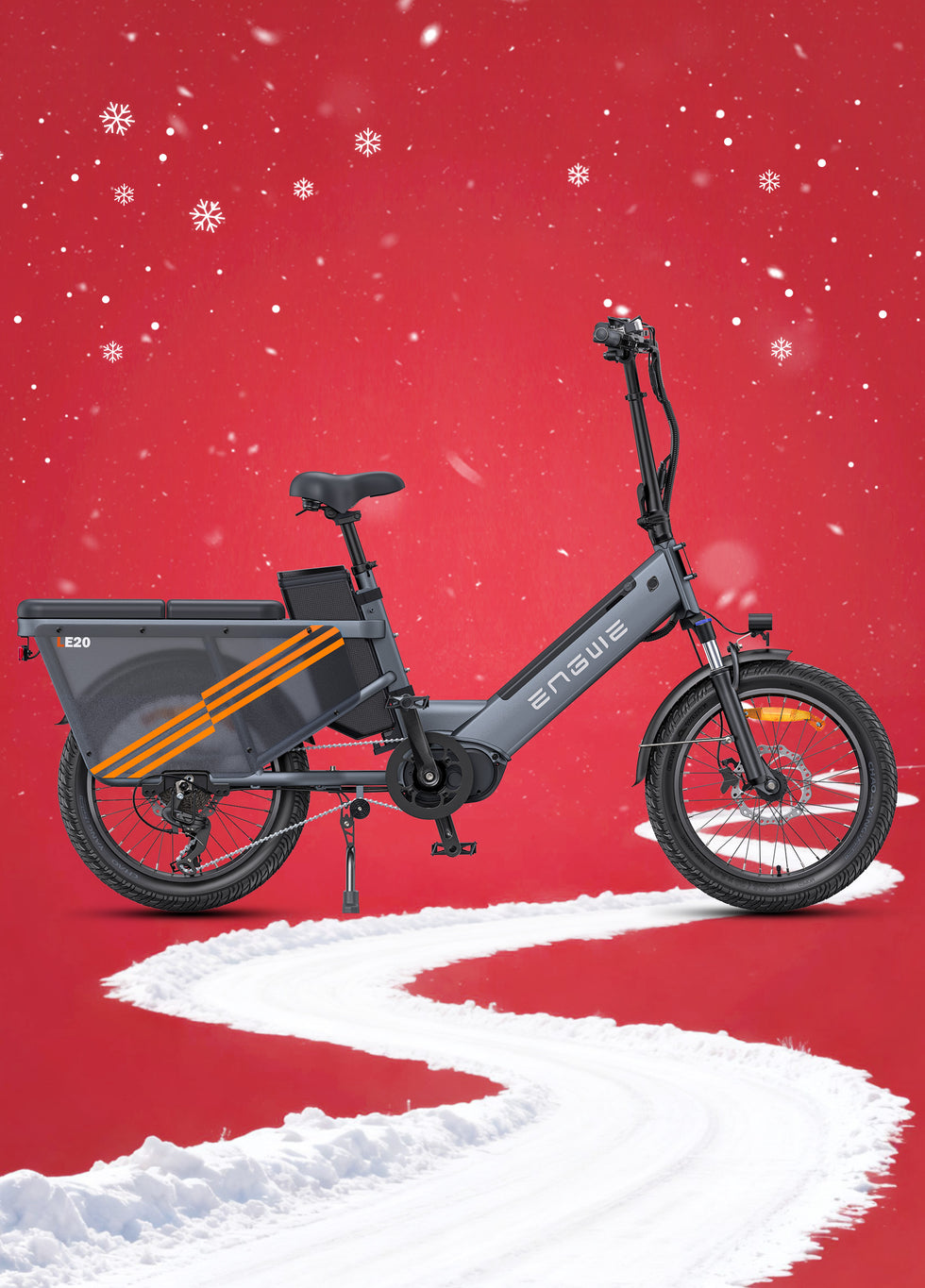
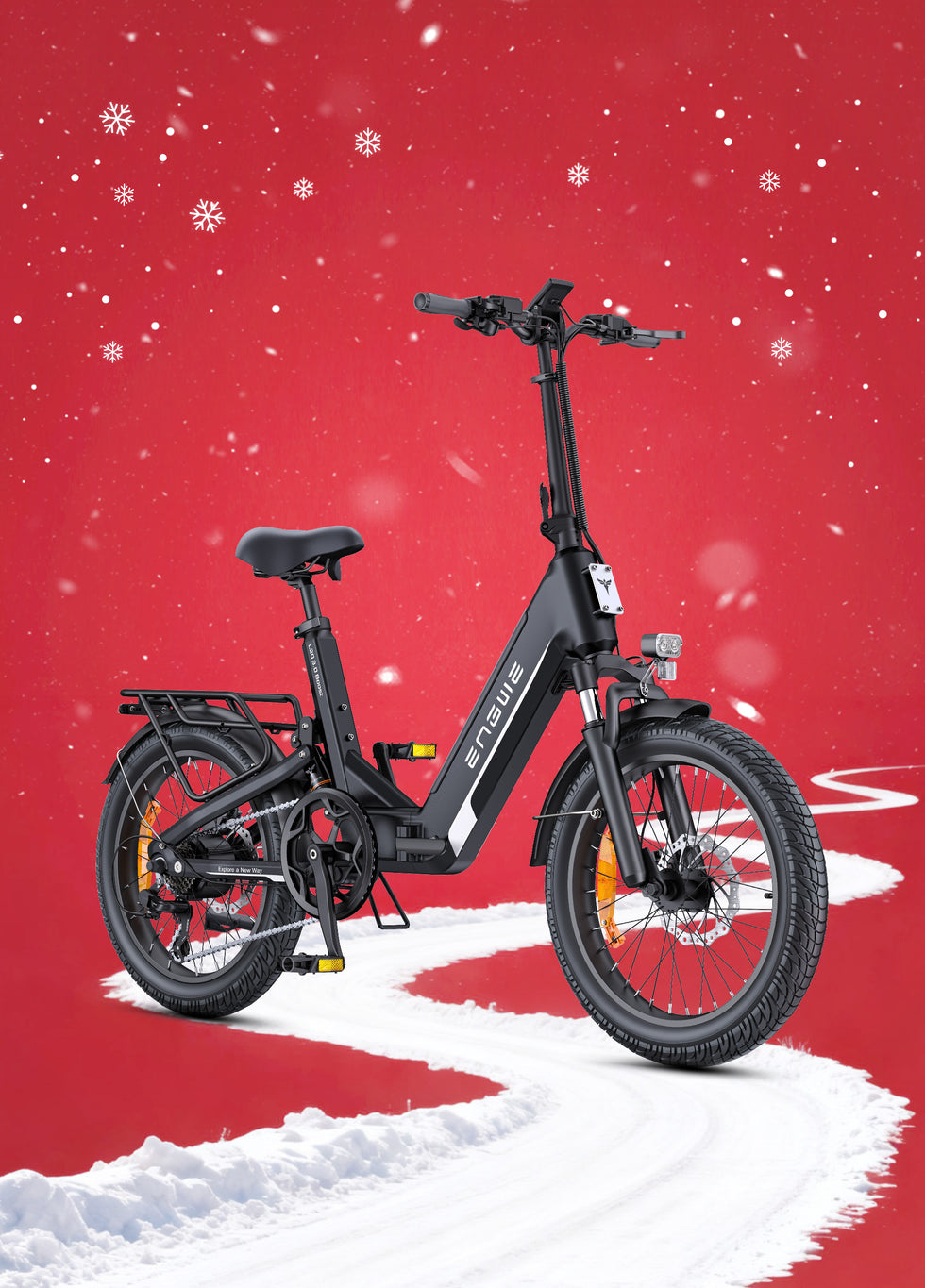
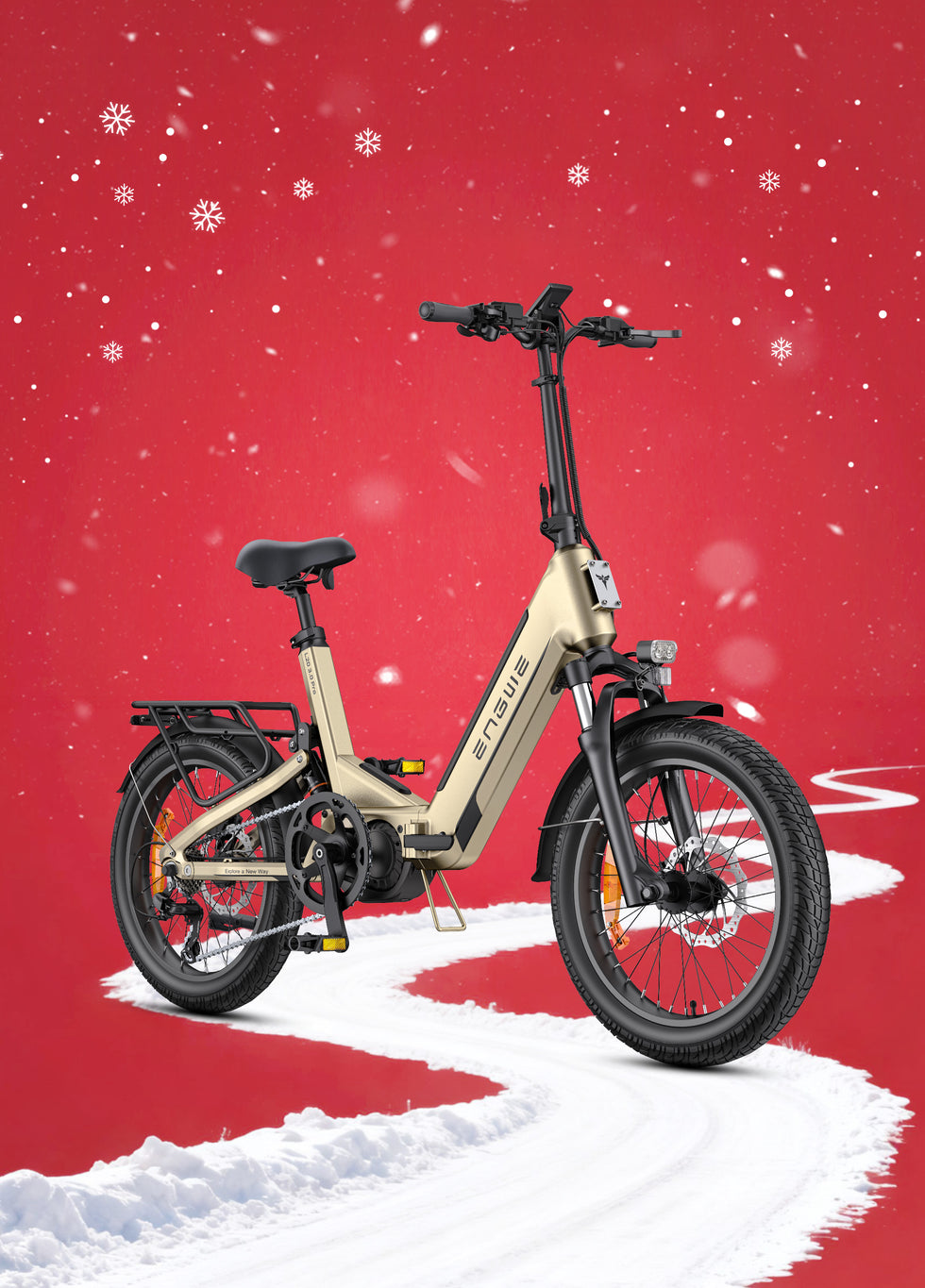
- a. High-performance motor. The bicycle has an installed 250W Hill Climb Mivice mid-drive motor capable of producing up to 100Nm of torque.
- b. Uncompromised comfort. The L20 is equipped with the first full e-suspension frame for a compact e-bike. Our engineering design can reduce up to 90% of vibration, allowing the rider to get a smooth ride in the terrain.
- c. Exceptional range. The bike is powered with a 720Wh Samsung battery, takes the bike up to 160km, and can be recharged within 6 hours.
- d. Advanced security. The bike is integrated with IoT. This feature allows smart antitheft tactics integrated with the bike’s app for real-time tracking.
- e. Premium components. The bike possesses a torque sensor, urban tires, and hydraulic discs.


3. Maintenance, Durability, and Long-Term Cost
The above factors contribute to the ease of maintenance, longevity of the drive and non-drive components, and overall long-term ownership cost. Ultimately, a good bike is always cheaper than it seems to be. Let’s pick, for instance, the maintenance-wise: wear – and how much wear the drivetrain suffers – will tell you when you should get a new chain or cassette when the motor needs reconditioning.
| Feature | Front & Rear Hub Motors | Mid-Drive Motors |
|---|---|---|
| Maintenance | Ease of maintenance**** | Minimum maintenance**** |
| Drivetrain Wear | Low drivetrain wear***** | High drivetrain wear***** |
| Initial Cost | Lowest initial cost*** | Highest initial cost*** |
Considerations
Hub Motors
- Simplicity: These are self-contained units. If the motor ever fails, you can replace the whole wheel assembly without affecting the rest of the bike’s components.
- Drivetrain longevity: Because the motor bypasses the chain and cassette, these parts wear like a non-electric bike. That means they’re less frequent to replace—and far cheaper.
- Key maintenance point: This is the one you’ll remember—if I ever get a flat on a rear hub motor, I have to remember to pull some extra steps. Disconnecting the motor cable isn’t that hard, so learn this bit of know-how to save a trip to the shop.
Mid-Drive
- Component wear: The motor’s power gets passed through the chain, cassette, and derailleur. It puts more force through those parts than a non-electric bike, which means they wear fast.
- Pro tip: I recommend a nice e-bike-specific chain and keeping your drivetrain clean and lubed. The money you save on replacements will add up.
- Durability: The motor is well-protected near the bottom bracket. That area rarely takes the brunt of any damage a hub motor would be exposed to.
- Upfront vs. long-term costs: While you’ll pay more for the bike, the highlight of riding an e-bike is the performance difference. This expense is often quickly justified for enthusiasts.
4. Efficiency, Range, and Sensor Technology
Finally, the sensor in the electric bike is the one that decides how it will deliver its power. And the sensor is a seldom-discussed quantity; therefore, it affects ride feel and battery range most directly. There are two main types – cadence and torque sensors, and when paired with a different drive system, they create a significantly different riding experience. Therefore, having knowledge about this aspect is one of the cornerstones of extending one’s range.
Cadence Sensors – common for hub drives:
- How it works: As an on/off switch: in essence, when you start pedaling, it provides the motor with a predetermined level of power for your pedal-assist tier. Whether you pedal hard or lightly does not matter.
- Ride feel: Jerky/lurchy: in other words, when you ride, the power seemingly kicks in and out for you.
- Efficiency: Less efficient. After reaching maximum speed, you may pedal very lightly. Therefore, you will continue to get the same level of assistance; there is no reason for that.
- User tip: Once more, after getting to the top speed, ghost-pedal to conserve battery life.
Torque Sensors – standard for mid-drives:
- How it works: Measuring your pedaling force: the harder you pedal, the more help you get.
- Ride feel: Smooth, intuitive, and human-like: in practice, you feel as if you have superhuman legs because it seamlessly adds to your effort.
- Efficiency: More efficient. It merely gives the energy you truly need. Also, it conserves the battery, and this is crucial, particularly in different terrains.
- Key advantage: Offering better control.

5. Key Considerations and Recommendations
Which drive type is ideal for very steep hills?
A mid-drive motor is the best choice. The gears on a bike can be used with it, allowing the motor to produce a lot of torque at higher speeds as you commute. Hub motors are unable to perform well on sustained, extremely steep ascents, or they become too hot.
Which is the most cost-effective for me to purchase and maintain?
Front hub motors are usually the most cost-effective solution at the dealer level. Additionally, the long-term maintenance costs are lower because they do not damage the bike’s chain and cassette.
What driving style allows me to have a more natural riding experience?
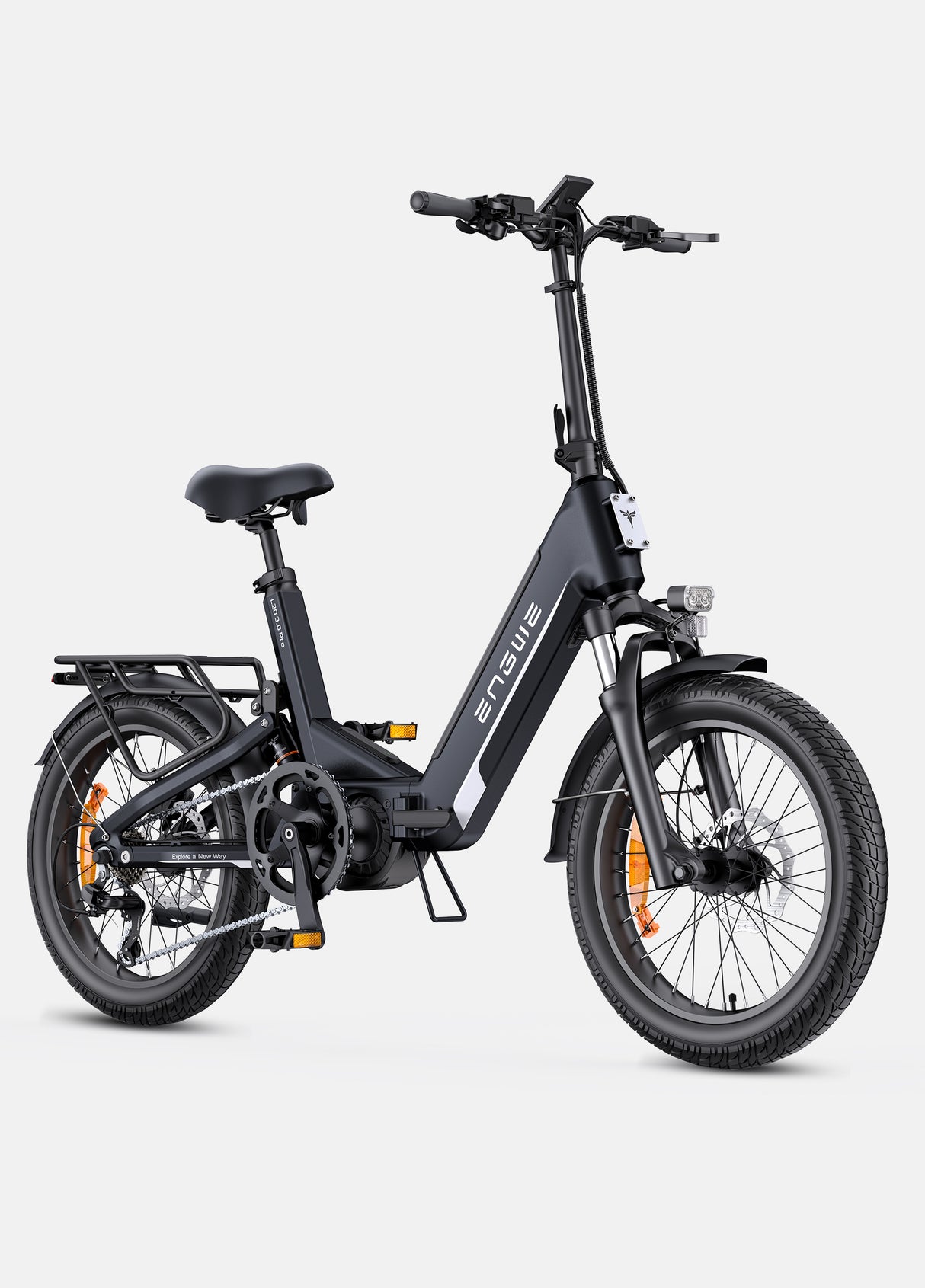
You can enjoy a more natural journey if you drive with a torque sensor. A bike with this level of intuitive use is included in this pair of bikes. These sensors are a standard feature on mid-drive models such as the ENGWE L20 3.0 Pro, and they provide just reasonably fantastic experiences. On the other hand, choosing the right driving style for you converts your fat tire e-bike from a tool into a selection!