
Unleash your e-bike’s full potential with one simple adjustment: tire pressure. This vital factor determines the perfect combination of getting the best range out of your ride while still having smoothness and comfort. Featuring our own personal calculator, this guide will do all the hard work for you – it’ll even help you find your perfect PSI based on the type and weight of tire that you’re riding to ensure every cyclist can eke out every last bit of performance. Let’s get you dialed in for the sweet spot of fitness and fun on your electric bike.
1. The Basics On How Much Tire Pressure Matters
Before you lower your tire pressure, it’s important to know the science. Your tire pressure (PSI) is directly correlated to how your Electric Bike connects with the ground. It determines the size and shape of the “contact patch” — in other words, that little bit of your tire that is touching the ground at any one time. That in turn impacts rolling resistance, grip, and comfort. But it is easy to mismanage this basic setting and experience a less efficient ride that's uncomfortable, if not unsafe. Understanding these basic principles will give you the foundation of being a better and smarter rider.
KEY CONCEPTS EXPLAINED:
Rolling Resistance:
This is when an object (your tire, say) rolls along another surface; there’s a force opposing it. More pressure means a smaller, harder contact patch and less of this resistance that forces your motor to do extra work.
Contact Patch:
Area of the tire in contact with the ground. Less pressure makes it larger so that you have more to grip, but also more resistance.
PSI (Pounds per Square Inch):
Measurement used to gauge air pressure in a tire.
Why Good Inflation is a Must:
Safety:
Few things are as unsafe as riding on tires that are under-inflated and feel dragging, slogging through molasses at best or, at worst, over-inflated with poor grip, handling like they’re suddenly made of ice.
Efficiency:
Proper pressure is the number-one factor you can control when it comes to stretching your battery’s range.
Comfort:
Your tire pressure is your primary suspension—air pressure is the main thing that’s going to smooth out a gravel road.
Extend Tire Life:
With a puncture-resistant tube, you will get significantly more life from your tire.
2. MAXIMUM RANGE-SEEKING: THE HIGH-PRESSURE METHOD
When your main objective is to go as far as you can on a single charge, high tire pressure is your BFF. You want your tires inflated to the top end of the recommended range; this minimizes how much a tire deforms when rolling. This results in a smaller, harder contact patch that significantly reduces rolling resistance. Your e-bike’s motor will use up less power to keep going, which means more range from your battery. This approach works well for commuters, cross-country or road-style tourers, and those riding on fairly flat paved surfaces where conserving energy is the key factor. That said, pay attention to and never exceed the tire’s sidewall recommended max PSI.
The Advantages of High PSI for Mileage:
Less Friction:
A hard tire will roll more smoothly on the pavement.
More Battery Life:
Using less energy to overcome resistance means more battery life.
Faster Rolling Speed:
You can ride at a higher average speed independently, all with the same amount of effort or motor assist.
Step-by-Step Guide to Inflating for Maximum Range:
Step 1: Find the manufacturer's recommended tire pressure printed on the side of your tire (e.g., "Inflate to 35-55 PSI").
Step 2: Aim for the high end of this range for maximum range, but be sure to stay about 5 PSI below the absolute maximum to compensate for pressure expansion due to heat.
Step 3: Inflate with a quality floor pump to the pressure you desire.
Step 4: Inspect your pressure before every long ride, as tires lose a bit of air over time.

3. Focusing on Comfort and Traction: The Low-Pressure Plan
High pressure is wonderful for range, but it can give you a rough and jarring ride. When comfort and traction are the priority, rather than just eking out that last mile, the answer is to lower your tire pressure. A soft tire has a larger, more compliant contact patch that can deform to imperfections in the road surface, bumps, cracks, and gravel. This enables the tire to function as a first-stage shock absorber, damping out vibrations before they reach your body. What’s more, that bigger contact patch provides much-improved grip, which is very important not only for safety but also for improving how the bike feels – whether you’re flicking through dirt paths, riding in the wet, or over uneven cobblestones.
Benefits of Lower PSI for a Better Feel:
Vibration Damping:
The tire absorbs more of the shock, giving you a much smoother and less tiring ride.
Better Traction:
The increased contact patch means more rubber on the road. A quality tread pattern provides awesome cornering traction and incredible leaning angle grip, helping you feel more secure during riding or racing.
Better Control:
Whether on trails or unpaved roads, a softer tire creates more contact between the ground and your wheel to improve handling.
When to Ease Your Pressure:
Riding on roads in bad condition or cobblestone streets.
Riding on gravel paths or light off-road trails.
Wet riding conditions where extra grip is required.
When riding unloaded and you prefer a cushy ride over speed.
Please Note: Do not go below the minimum pressure rating stipulated on the side of your tire, as this could cause "pinch flats" and potential rim damage.
4. Your Own PSI Calculator: Perfecting It All
The “perfect” tire pressure does not exist as a single number; it is part of a range, one that takes more than size into account as well. Regard your tire sidewall’s PSI range as a point of departure, not something cast in stone. Your task is to find the appropriate sweet spot in that spectrum for you and your usual riding. The most important factors are your overall weight (you plus anything you’re carrying) and the width of your tires. Heavier loads require more pressure in the tire to support the weight, while wider tires are designed to run at lower pressures than narrow road ones. Consider the following table as a preliminary calculator, and make adjustments based on terrain and feel.
The Primary Drivers of Your Optimum PSI:
Total Weight (Rider + Gear):
The heavier the load, the more pressure it takes to keep from feeling slow and getting flats.
Tire Width/Volume:
Wider tires have more air volume, allowing you to safely run lower pressure for comfort without causing damage.
Terrain:
Adjust PSI level based on terrain--higher for smooth pavement, lower for rough or soft surfaces.
How to Find Your Sweet Spot in Practice:
Step 1: Use the table below to find a base PSI according to your weight and tire width.
Step 2: Take a short test ride on a familiar route.
Step 3: If the ride feels too bumpy, release 2-3 PSI and try again. If it seems sluggish or “squirmy” through corners, increase the pressure by 2-3 PSI.
Step 4: Continue to do so until you find the pressure that is most efficient and comfortable for you. This is your personalized PSI.
| Rider Weight (lbs / kg) | 2.0-2.5 Tire Width (in) | 2.6-3.0 inch tire width |
|---|---|---|
| 120-150 lbs / 55-68 kg | 35 - 45 PSI | 22 - 30 PSI |
| 150 - 180 lbs / 68-82 kg | 40 - 50 PSI | 25 - 35 PSI |
| 180-210 lbs / 82-95 kg | 43-53 PSI | 28 - 38 PSI |
| 210-240 lbs / 95-110 kg | 50 - 60 PSI | 35 - 45 PSI |

5. Necessary Equipment and a Top E-Bike Recommendation
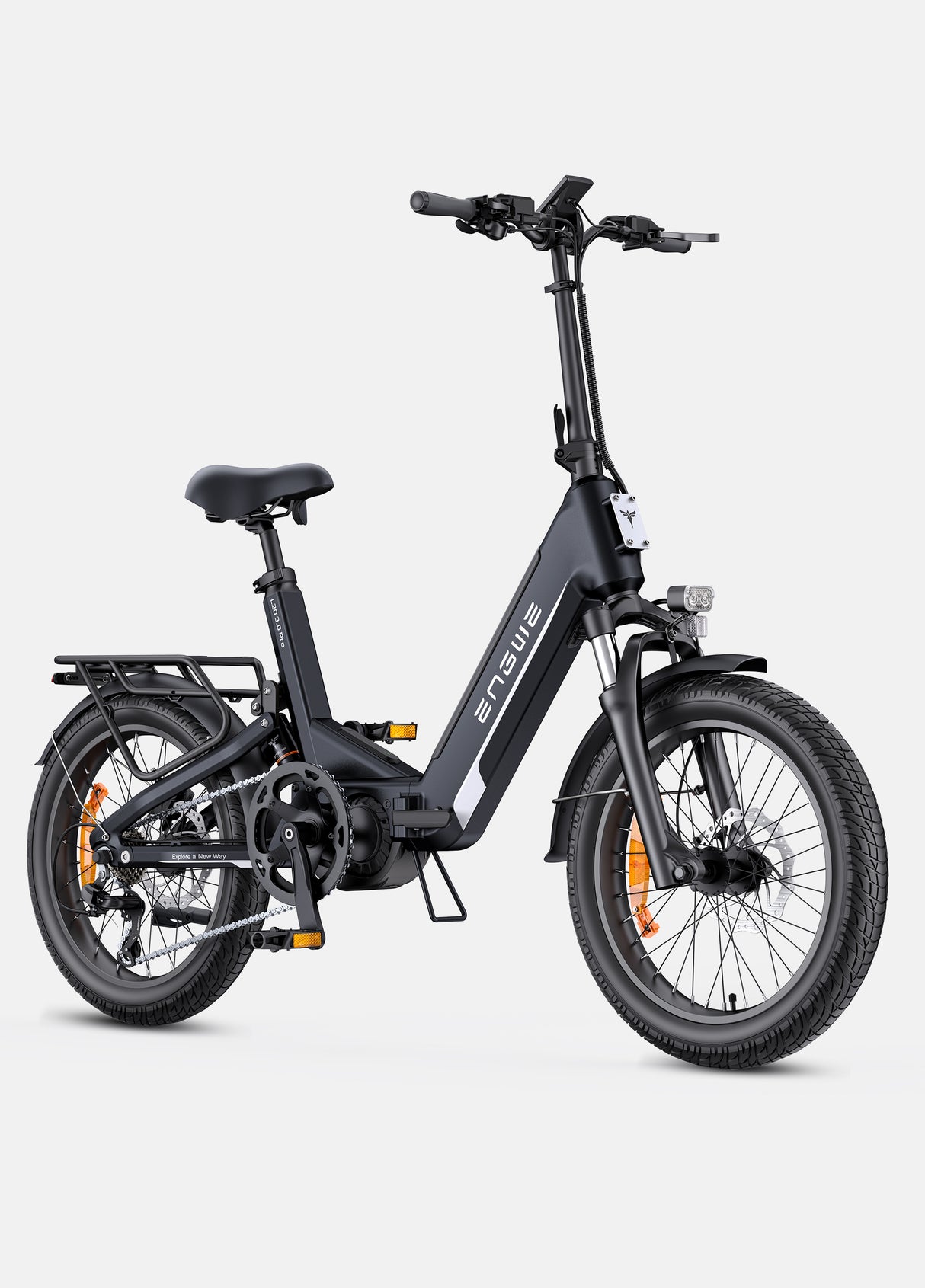
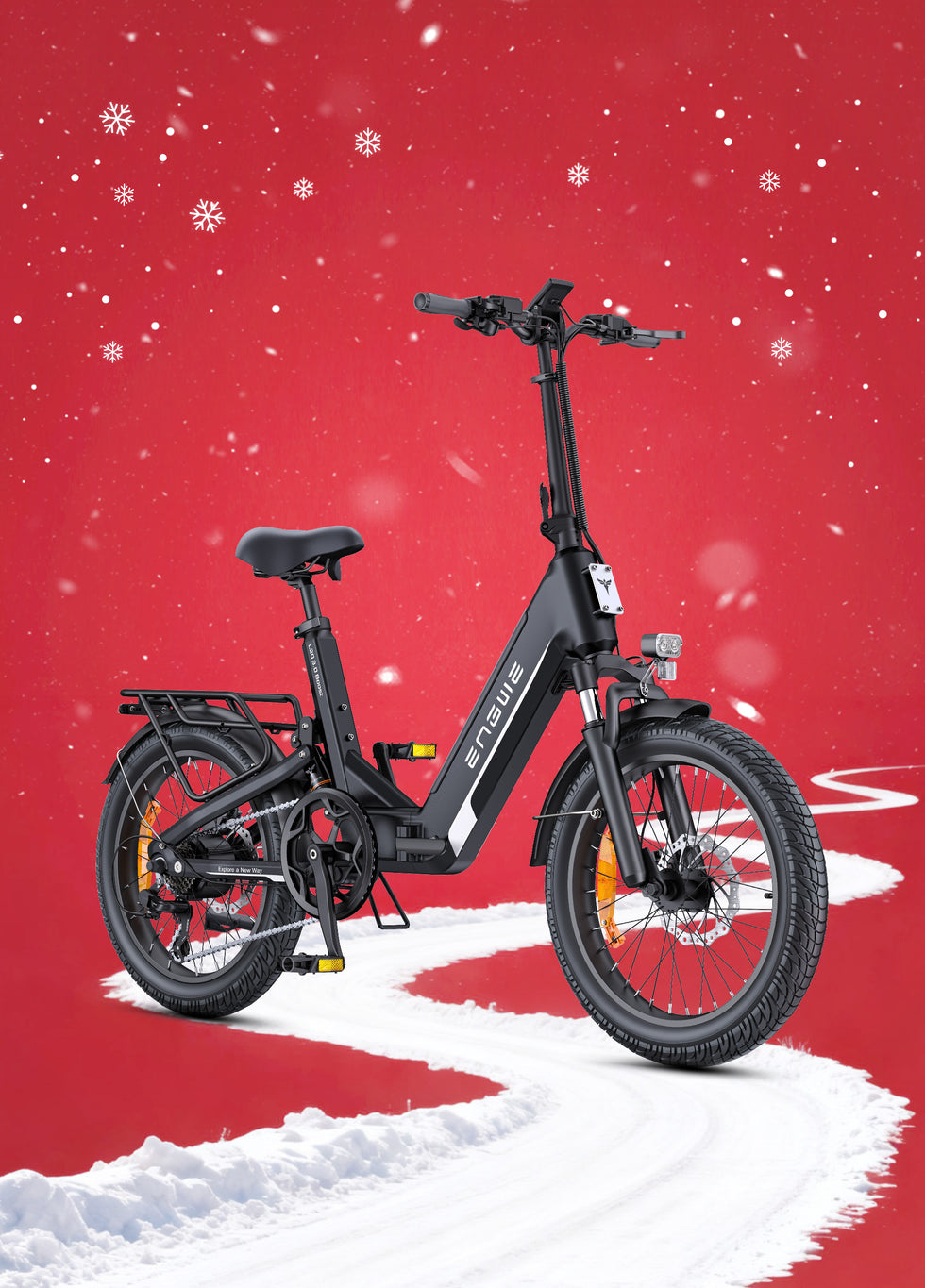
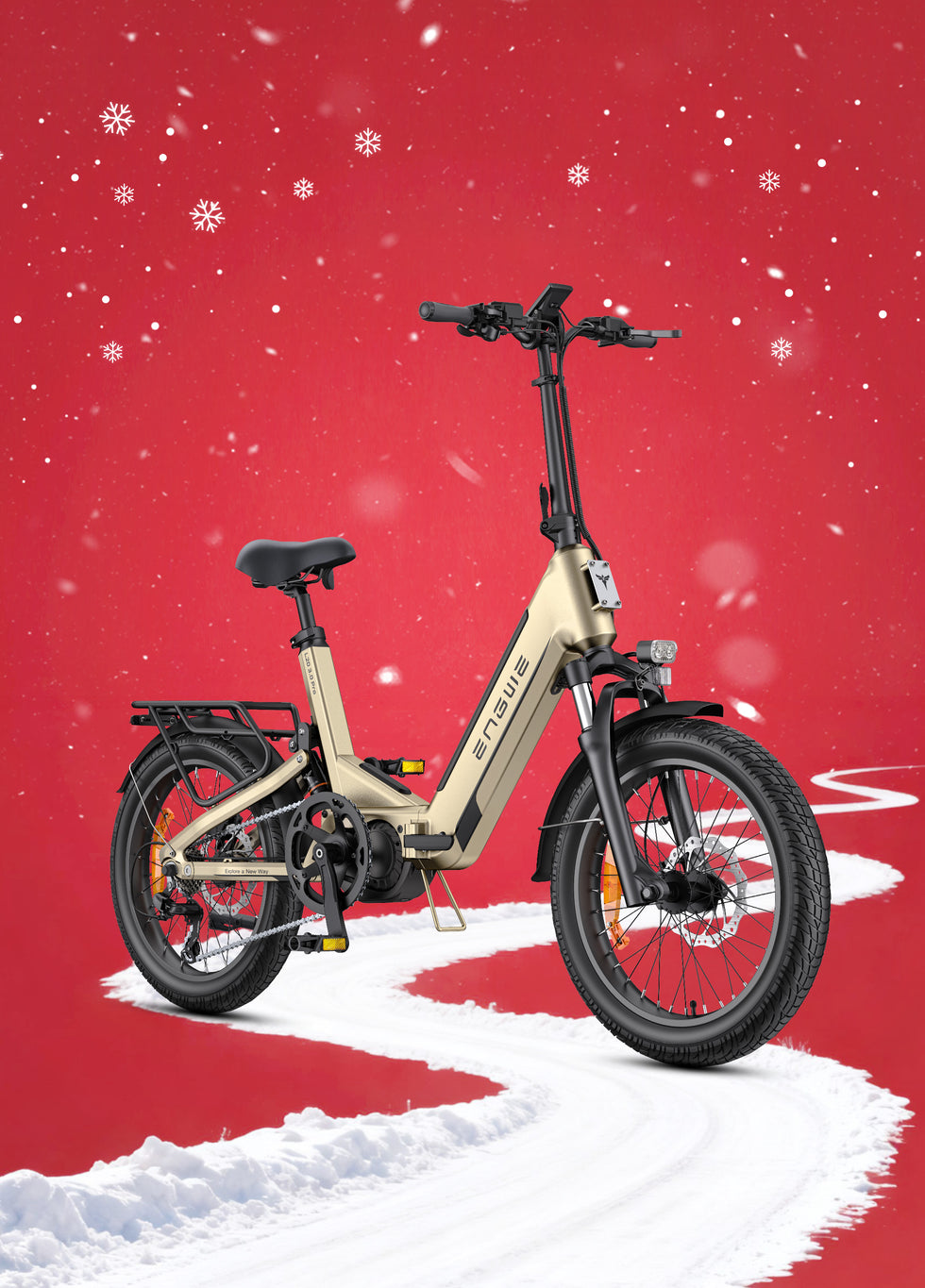
Managing your tire pressure is a simple science when you have the right tools and a good electric bike. A good bike makes the most of that final tuning adjustment! For the discerning rider who wishes to experience the best of both worlds—comfort and performance—and take on any path with confidence, we wholeheartedly suggest looking at the ENGWE L20 3.0 Pro. This bike is specially designed to enhance the ride thanks in part to its sophisticated full-suspension system that can absorb 90% of vibrations. This is further complemented by its tough 20" x 3.0" street tread tire to let you run lower pressures for a more comfortable ride that doesn't impact the bike's performance! With a powerful 250W Mivice motor, it provides enough power to ride over various terrains you never thought possible. It also comes with a 720Wh Samsung battery for an impressive range of up to 160km and supports fast charging at 8A, ensuring you don't have to wait for your next adventure. Smart technology such as the ENGWE IoT module ensures additional security, with GPS tracking so your ride is never lost. The ENGWE L20 3.0 Pro, with an intuitive power delivery system (torque sensor) and full-suspension frame, is a formidable platform for riders who want range and comfort.

Basic Tire Maintenance Tools:
Floor Pump with Gauge:
Used for fast and accurate inflation at home.
Digital Pressure Gauge:
Making the pressure gauge reading clear.
Portable Mini-Pump:
For emergency inflation during your ride.
Top E-Bike Tire Picks:
Schwalbe Marathon E-Plus:
Extreme puncture protection and durability, great for commuters.
Continental Contact Plus City:
Provides a great mix of low rolling resistance, traction, and durability.
Maxxis Rekon:
A versatile choice for riders who ride a combination of pavement and light trails.
Frequently Asked Questions:
How often should I check the tire pressure on my electric bike?
Check it at least weekly and before any long ride. Temperature can cause PSI to vary, so it’s good practice to give it a quick check anytime.
Can I use a gas station air compressor?
You can, but with extreme care. They can fill tires very quickly and make it easy to overinflate and damage a bike tire. Use short bursts of air and verify the pressure with your own gauge.
What is a "pinch flat"?
It’s what happens when a tire with inadequate pressure smacks into the edge of something hard (a pothole, say), compressing it so much that the inner tube gets pinched between the object and a wheel rim, leaving two small holes that look like they came from snake bites.
If you want to unlock the best riding experience, experimenting with your tire pressure is the way to go.