
Terrain Adaptability and Traction
Arguably, choosing the right tires for your electric bike is your most consequential choice; it will define your riding experience. Indeed, it will determine where you can go, how rapidly you may go, and how easily you may accomplish this. In general, you have a selection between fat or thin tires in making this critical judgment. This report will address the five important parameters of terrain adaptability and traction.
Fat and thin tires principally vary in terrain adaptability. As a consequence, they are suitable for distinct locations, situations, and uses. In general, fat tires are much more versatile and grippier but significantly less applicable to certain conditions. Thin tires are precise and require less exertion. Consequently, thin tires claim superiority in certain conditions.
Fat Tires (Generally four inches or wider):
Pros:
Their massive contact patch can float on sand, snow, and mud more than it can dig in. The large volume of space and the ability to sustain lower air pressure (5-30 PSI) mean the tire can compress against items like stones and roots, giving increased traction on specialized paths.
Cons:
Their aggressive pattern and massive overall scale may produce a dragging sensation against smooth pavement, making them unsuitable for a sole urban context.
Tip: Lower the pressure for very soft ground, such as deep sand or fresh snow, to the lower end of its suggested range to achieve the most optimum traction. This extends the tire, raises the amount of contact, and so increases buoyancy. Always inflate to a higher pressure for use on harder surfaces.
Thin Tires (Typically under 3.0 inches):
Pros:
Due to their high recommended air pressure of 40-80 PSI or more, they cover a minimal contact patch and thus have low rolling resistance on asphalt and concrete. These tires are the best choice for commuting within the city and road cycling.
Cons:
They are so narrow and their high-pressure tire profile means that they immediately sink into soft conditions and will slide around, even if you ride carefully.
Performance, Speed, and Battery Efficiency
The tire physics directly influences the speed of your bike and, most notably, your battery’s range. The amount of rolling resistance that needs to be overcome translates into a substantial strain on the battery, and this is where the two types of tires differ:
Thin Tires:
Pros:
Thin tires have a low rolling resistance that gives the bike higher top speeds and means that you pull less power from the motor to keep cruising on pavement surfaces. In effect, your battery’s range is greater. Because the motor uses less power, the bike is easier to accelerate.
Cons:
Going over rough or unpaved surfaces diminishes the battery’s range.
Money-Saving Knowledge: On an e-bike, thin tires require less battery power to cover the same range. Therefore, to meet a range requirement, you can buy a battery at a lesser cost than for a fat-tire bike.
Fat Tires:
Pros:
Due to their ability to absorb imperfections as opposed to being deflected by them, they help your bike maintain momentum outstandingly over choppy terrain.
Cons:
The increased weight and formidable rolling resistance create massive friction that utilizes more power from the motor. As a result, your battery range will suffer significantly when tested under similar conditions to those of a thin-tired e-bike. The difference can be quite substantial, with the former sometimes losing up to half the range of the latter. A general comparison may look like this:
| Fat Tires (4.0”+) | Thin Tires (<3.0”) | |
|---|---|---|
| Ideal Terrain: | Sand, Snow, Trails, All-Road | Pavement, Hard-Packed Dirt |
| Rolling Resistance: | High | Low |
| Efficiency for the Battery: | Lower | Higher |
| Weight (usually): | Heavier | Lighter |
| Grip on Loose Surfaces: | Excellent | Poor |
| Handling Agility: | Deliberate, Stable | Nimble, Responsive |

Ride Comfort and Stability
The massive influence your tires have is often played down. Incoming bumps, cracks, and vibrations all pass through the tire before the seat or frame, making it your first line of defense. Here, the fat tires’ cushioning capacity is practically unequaled. Those looking for combinations of extreme comfort, ruggedness, capability, and undeniable style should look at offerings in the line of the ENGWE M20.
a) Fat Tires:
Pros:
The sheer amount of air in a fat tire is a natural suspension. In other words, it “soaks up” much of the road, and a rider experiences a smooth ride, being carried on a cloud. Moreover, such a tire can provide confidence due to stability: “The larger footprint and increased stability make you feel invincible”—for those who are just beginning to ride a bicycle or are riding on unpredictable surfaces, stability matters. Apart from that, at extremely low pressures, they may exhibit some slight “self-steering,” which means they may follow the road or ground’s contours.
Cons:
They transmit a lot of rolling resistance to a bike. “Due to their design, fat tires aren’t well-suited to speed.”
The ENGWE M20 Advantage
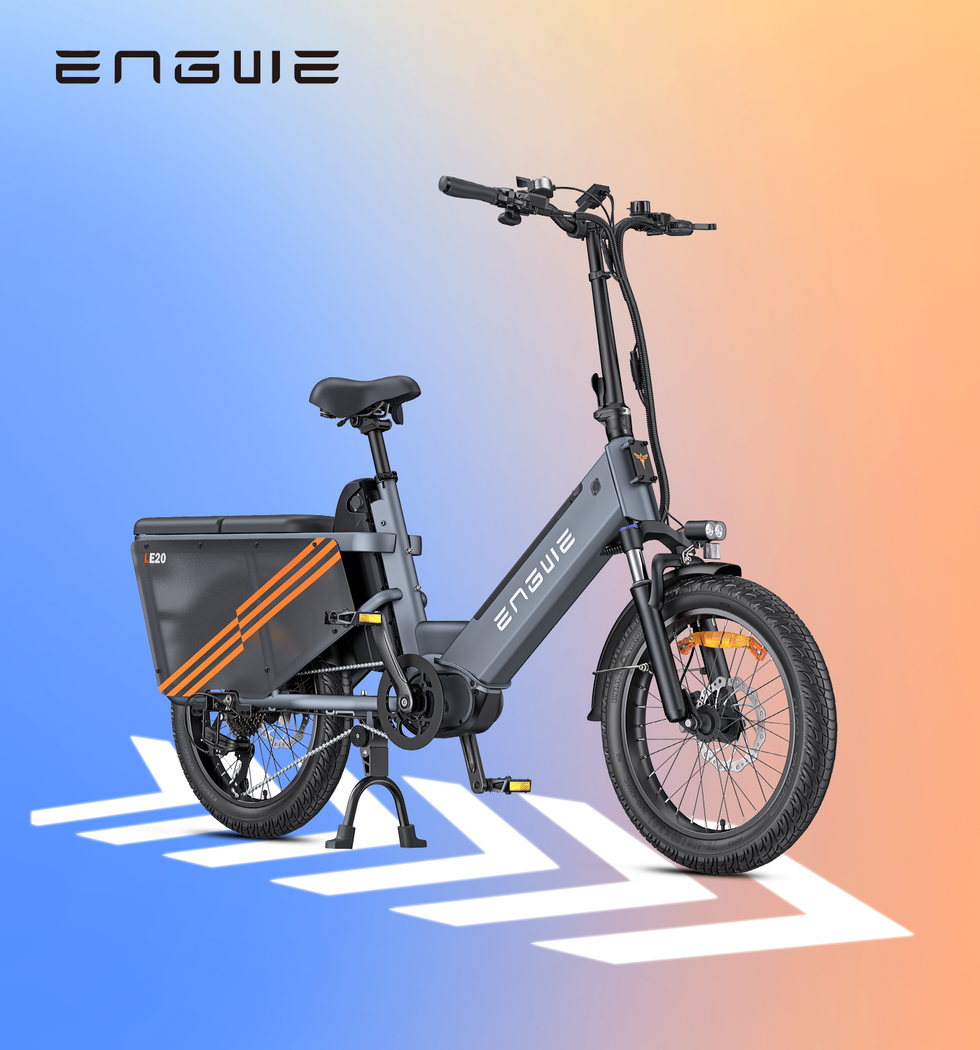
""The ENGWE M20 focuses on the former and created two additional benefits. On the one hand, it designed robust 20×4.0-inch fat tires that look serious and aid in riding, complemented by a full dual suspension. The latter fact, together with the powerful motor, compensates for the resistance, and the optional double lithium battery makes it easier to forget about limited mileage. By buying the ENGWE M20, a person invests in comfort, good tires, and relaxation, even when he or she decides to take on a grass field.

b) Thin Tires:
Pros:
They provide a good “feel” for the road. In other words, veteran cyclists would appreciate the direct connection to the road.
Cons:
They transmit a LOT of it. “A thin tire is far less good at muffling road buzz than a fat one and, as you might guess, the connection between your fingers, the brake levers, and the pedals makes the trip more jarring.” Moreover, “even a small push will send the bike forward slightly.”
Puncture Resistance, Maintenance, and Cost
Fat Tires:
Pros:
Due to their thick, sturdy construction, fat tires are often more puncture-resistant against small debris. Because of their larger air volume, they are also less susceptible to pinch flats, where the tube is pinched against the rim by an obstacle.
Cons:
Replacement tires and inner tubes are drastically more expensive and less available at local bike shops. Fat tires might require an online order. Finally, roadside repair can be more challenging due to the size and weight of the tire.
Crucial Tip: If you’re buying a fat-tire e-bike, buy a spare inner tube at the same time. Store it at home or in your repair kit to avoid waiting a long time when you get a flat. Make sure your portable pump is a high-volume model designed for fat tires.
Thin Tires:
Pros:
They are the industry standard. Tires and replacement tubes are inexpensive and widely available at any bike store. Finally, they are also lighter and easier to remove and reinstall. Thus, fixing a puncture is easier.
Cons:
They are much more prone to pinch flats if not kept at the proper pressure. Also, they can be more readily punctured by road debris such as shards of glass.

Handling, Agility, and Practicality
Finally, think about the effect on the bike’s overall handling and day-to-day practicality. This includes your responsiveness on the road, how quickly you can swerve out of the way, and how much effort you need to put your bike on a car rack, etc.
Thin Tires:
Pros:
They make the bike more nimble, quick, and responsive. This makes a huge difference in the city, so you can weave through traffic with ease and take sharp corners comfortably. It also lightens the whole electric bike, and it is significantly easier to lift if you need to carry it upstairs or mount it on a vehicle.
Cons:
This also means it feels less stable at high speeds or on uneven surfaces.
Key Consideration: If part of your daily routine is lifting your e-bike to store it or driving it around on a rack, the thin-tired versions would save you more weight.
Fat Tires:
Pros:
This leads to a lot of stability and the sensation of being more securely attached to the ground. This promotes trust and is extremely forgiving. It is beneficial for relaxed cruises or rough rides.
Cons:
The steering is slower and less sensitive. The total weight and volume of the wheels make the e-bike considerably heavier and more difficult to transport or store. The width of fat tires is not compatible with most automobile bike racks.
Common Questions
1. Can I put fat tires on an e-bike designed for thin tires?
Probably not, as the frame and fork of a bike are not physically large enough to accommodate the much broader profile of fat tires. Regular frames are not designed for it.
2. For a regular paved commute, which one is more suitable?
For a long everyday journey along paved courses, thin-tired bikes are the stable favorite. Their overall battery conservation, low rolling resistance, and nimble handling make them the ideal pick.
3. What is the single most significant maintenance advice for fat tires?
If you have to choose one, keep an eye on and regulate your tire pressure regularly. Road grip requires less pressure while efficiency needs more. As a result, you will have the best of both worlds.
Overall, tire selection guarantees the most pleasant experience with your electric bike.